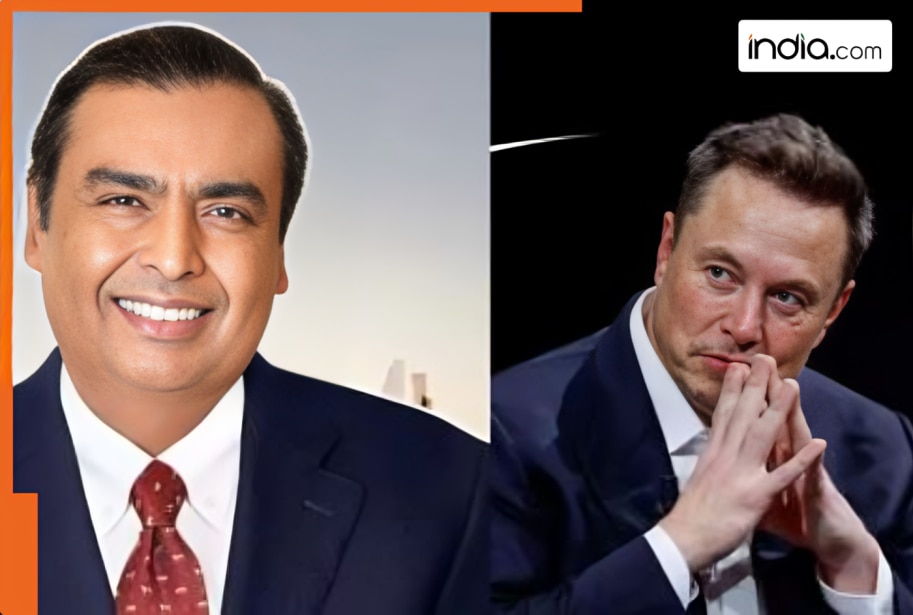
India’s telecom ministry has announced a decision to allocate satellite spectrum administratively rather than through auctions, aiming to align with global practices and increase consumer choice. Telecom Minister Jyotiraditya Scindia highlighted the potential of this policy to attract international companies like Elon Musk’s Starlink and Amazon’s Project Kuiper, despite opposition from Mukesh Ambani’s Reliance Jio.
Starlink, Elon Musk’s satellite broadband initiative, has faced resistance from Reliance Jio, which pushed for spectrum auctions to ensure a “level playing field.” Reliance has already invested $19 billion in airwave auctions and fears losing broadband customers and potentially voice and data users to Starlink as satellite technology advances.
Scindia, however, defended the administrative allocation model, explaining that auctions could deter foreign companies due to the high costs involved. “Technology is never constant,” Scindia said, urging companies to adapt and evolve. He emphasized that the current limitations of satellite technology, which requires a clear line of sight to the sky, prevent it from directly competing with terrestrial networks indoors.
“My job as telecoms minister is to make sure that you have as many choices as possible,” Jyotiraditya Scindia told Reuters during an interview.
India, with its 942 million telecom users and highly competitive landscape, is one of the world’s largest telecom markets. Deloitte predicts that the satellite broadband market in India could reach $1.9 billion by 2030, making it a lucrative opportunity for companies like Starlink, Amazon, and local players such as Reliance Jio.
Applications from Starlink and Amazon Kuiper to launch satellite broadband services in India are still under review. Scindia stated that his goal as telecom minister is to provide consumers with a wider array of choices while ensuring that India stays at the forefront of global trends in technology adoption.
In other telecom updates, Vodafone Idea, in which the government holds a stake, disclosed $24 billion in dues owed to the government. Scindia refrained from commenting on whether there would be relief measures for the company. Meanwhile, the government is working to revive state-owned Bharat Sanchar Nigam Limited (BSNL), which has struggled to compete in the fiercely competitive market.
BSNL, with 99 million users, is expanding its 4G services as part of its turnaround strategy. This aligns with Prime Minister Narendra Modi’s broader initiatives to enhance India’s telecom infrastructure.
Elon Musk’s Starlink has already disrupted markets elsewhere, offering satellite broadband at significantly lower prices in countries like Kenya compared to the United States. This pricing strategy has drawn criticism from local players, highlighting the disruptive potential of satellite broadband services in emerging markets.





For breaking news and live news updates, like us on Facebook or follow us on Twitter and Instagram. Read more on Latest Business News on India.com.