


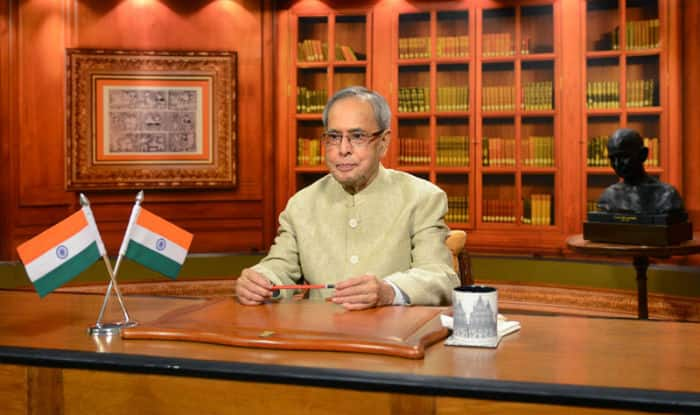
President Pranab Mukherjee on Friday promulgated the ordinance to amend the Banking Regulation Act 1949, effectively giving more power to the Reserve Bank of India (RBI) to deal with non-performing assets directly, according to a report by Mint. The Union Cabinet had on Wednesday passed the ordinance to amend section 35 of the Act, that deals with the powers of the apex bank to inspect bad loans. The ordinance was then sent to the President for his approval.
Speaking in the aftermath of the ordinance getting passed by the Cabinet on Wednesday, Union Finance Minister Arun Jaitley had briefly apprised the media about the move, refusing to divulge any more details. Speaking about the amendments and their effectiveness, Finance Secretary Ashok Lavasa was on Thursday, quoted as saying by PTI, “It is not possible for me to put down a number on how this (NPAs) will go down, but certainly we feel that these changes will make the system more effective in handling the bad loans.”
He further told reporters that the authorities would “be able to reach resolution in many of the cases” on the back of professionalism in the banking system and participation of promoters themselves, said a PTI report. He said that he was positive that the amendments would allow RBI and other lenders to take necessary steps to deal with toxic assets. The government had taken the move after a discussion with stakeholders, after which it felt it needed to take some important changes in the Act to tackle the problem head-on, reported PTI.
Once the amendments comes into effect, RBI will have the power to create a timeline for banks to deal with some of their biggest bad-loan accounts. The apex bank will be able to ask banks to sit down with long-time defaulters and reach a settlement, ultimately leading to resolution of bad loans amounting to Rs 9.64 trillion, reported Mint. The report further said that the problem is largely restricted to 50 large defaulters.











For breaking news and live news updates, like us on Facebook or follow us on Twitter and Instagram. Read more on Latest Business News on India.com.