





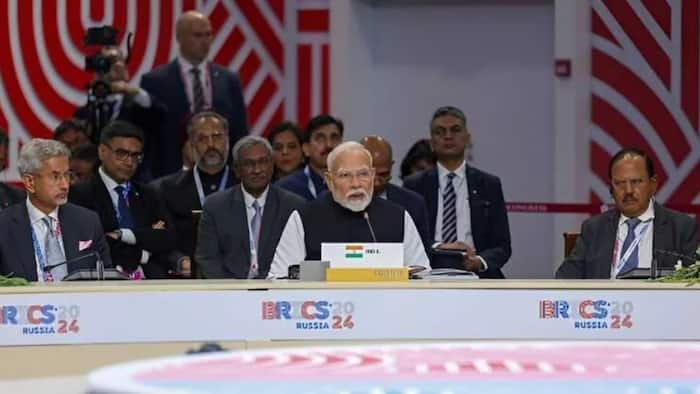
India is expected to push for greater use of central bank digital currencies (CBDCs) for cross-border trade and payments among BRICS countries at the upcoming summit in New Delhi. However, New Delhi is unlikely to support the creation of a single BRICS-wide payment network that could be viewed as an alternative to the US dollar or the Western-dominated SWIFT system, according to people familiar with the discussions as per Bloomberg.
With India chairing BRICS this year, Prime Minister Narendra Modi is backing the use of central bank-backed digital currencies to settle trade directly between member countries. The proposal would allow participating nations to connect their CBDC systems and use them for cross-border transactions. This could reduce the role of banks in some transactions, lower costs and make international settlements faster.
India also supports greater use of national currencies for trade instead of relying on a third currency such as the US dollar.
However, a final agreement on creating a common payment settlement system for the entire BRICS bloc is not expected at the leaders’ meeting in New Delhi this weekend.
BRICS countries have been exploring ways to connect their payment infrastructure and reduce dependence on global financial systems such as SWIFT. The issue gained greater importance after several Russian banks were removed from the SWIFT network following Russia’s invasion of Ukraine in 2022.
While India supports easier cross-border payments and the use of local currencies, it is cautious about creating a payment system that could be seen as a direct competitor to SWIFT.
New Delhi reportedly does not want BRICS to be projected as an anti-dollar or anti-Western grouping. Instead, India wants financial cooperation within the bloc to remain focused on improving trade and economic ties.
The Reserve Bank of India (RBI) has not commented on the reported proposal. External Affairs Ministry spokesperson Randhir Jaiswal said it would be too early to draw conclusions about the discussions taking place between BRICS finance ministers and central bank governors.
He said the discussions began on Wednesday and asked reporters to wait for the joint statement.
The use of local currencies for trade has already increased among BRICS members, particularly following Western sanctions against Russia. According to Ivan Nosov, head of Sberbank in India, about 96% of India’s trade with Russia is now settled through existing rupee-ruble arrangements.
Trade between Russia and China is also largely conducted using the yuan and ruble, Russian news agency Interfax has reported.
India has been promoting similar arrangements with other countries as it looks to increase the international use of the rupee.
India is currently conducting pilot programmes for its digital rupee, while China and Russia have also been testing their respective central bank digital currencies. Connecting these systems could eventually make it possible for businesses and financial institutions to settle certain international transactions digitally without depending as heavily on traditional banking channels.
BRICS leaders may also discuss linking their instant mobile payment systems. Such systems are mainly used for quick, low-value retail payments.
India has already taken steps to connect its domestic payment infrastructure with systems in other countries. Its Unified Payments Interface (UPI) has been linked with Singapore’s PayNow system, allowing faster cross-border remittances between the two countries.
Prime Minister Modi recently said such payment links should be expanded to countries with large Indian populations.
India has also entered into arrangements with the central banks of the UAE, Mauritius, Maldives and Indonesia to encourage trade using local currencies. More such agreements are reportedly under discussion.






For breaking news and live news updates, like us on Facebook or follow us on Twitter and Instagram. Read more on Latest Business News on India.com.
