English





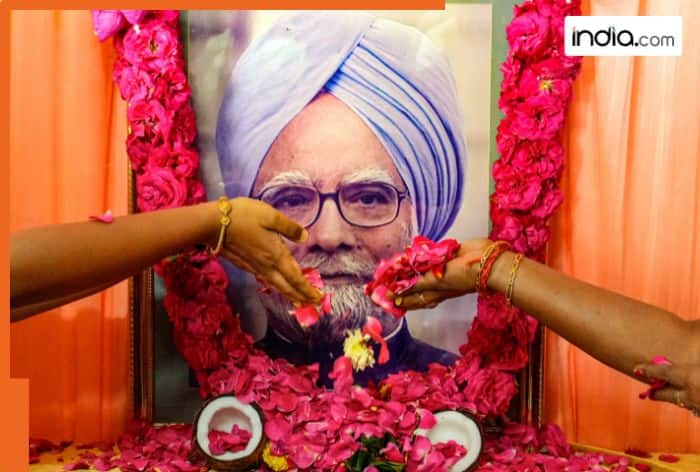
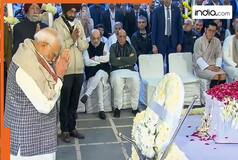
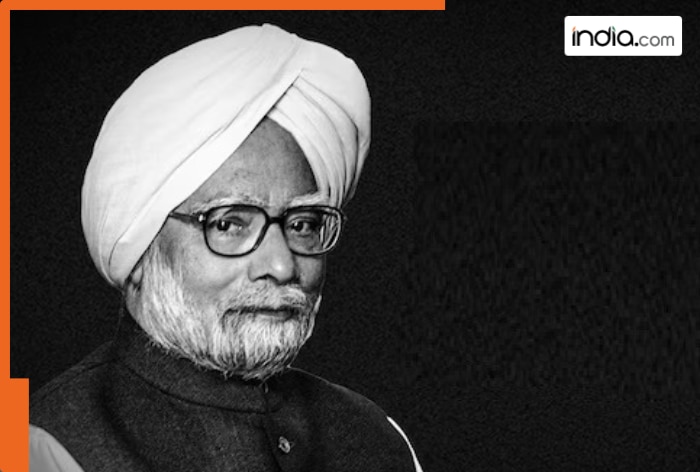
New Delhi: Former prime minister Manmohan Singh, the architect of India’s economic reforms, passed away in Delhi’s All India Institute of Medical Sciences (AIIMS) on Thursday night. Singh’s death was announced by the institute where he was admitted in the emergency ward around 8.30 PM in a critical condition.
An AIIMS bulletin said “he was treated for age-related medical conditions and had sudden loss of consciousness at home” on December 26. “Resuscitative measures were started immediately at home. He was brought to medical emergency at AIIMS Delhi at 8.06 pm. Despite all efforts, he could not be revived and was declared dead at 9.51 pm,” said the bulletin.
Manmohan Singh during his tenure as the Finance Minister and later as Prime Minister brought a slew of significant reforms. Amid this, a one-rupee note bearing his signature has also come to the fore. During that time, one-rupee notes featured the signature of the Finance Secretary instead of the Governor of the Reserve Bank of India.
All one-rupee notes printed bore Manmoha Singh’s signature when he served as Finance Secretary.
Dr. Manmohan Singh became the Governor of the Reserve Bank of India on December 16, 1982. He served as RBI Governor from 1982 to January 14, 1985. During his tenure, every currency note issued bore his signature. Manmohan Singh’s work as the Governor of the Reserve Bank of India was widely appreciated, and it was during this time that he came into the limelight with the then-government.
It was Alexandar who informed him that Narasimha Rao is planning to induct him in his cabinet as the Finance Minister. At that time, Manmohan Singh was the Chairman of the University Grants Commission (UGC) and had no connection to politics. As a result, he didn’t take Alexander’s words seriously. However, Narasimha Rao was very serious about him.
An anecdote from June 21, 1991, is mentioned in Manmohan Singh’s daughter Daman Singh’s book “Strictly Personal, Manmohan and Gursharan”. On that day, Manmohan Singh was at his UGC office when he was asked to go home, get ready, and attend the oath-taking ceremony.
The book further adds that when the new team members were lined up to take the oath, everyone was surprised to see Manmohan Singh among them. Although his portfolio was allocated later, Narasimha Rao had already informed him that he was going to be the Finance Minister.




For breaking news and live news updates, like us on Facebook or follow us on Twitter and Instagram. Read more on Latest Business News on India.com.