





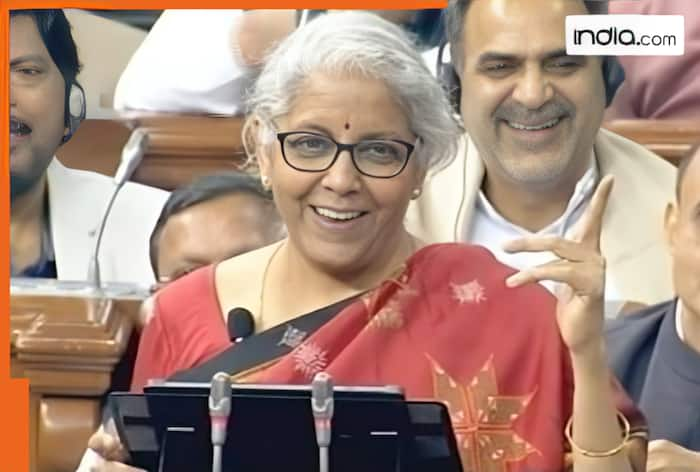
New Delhi: Finance Minister Nirmala Sitharaman is all set to present Union Budget 2026 on February 1. This will be Nirmala Sitharaman’s ninth consecutive budget. She also holds the record for the longest Budget speech, delivered on February 1, 2020, which lasted two hours and 40 minutes. In the Union Budget 2026, the middle class’s biggest hope rests on a restructuring of income tax slabs. Rising inflation over the past few years has strained household budgets, and keeping this in mind, experts believe that Finance Minister Nirmala Sitharaman may increase the slab limits. Although a major step was taken in Budget 2025 by making income up to Rs 12.75 lakh tax-free under the new tax regime, expectations this time are that the threshold for the highest 30 percent tax slab could be raised from the current Rs 24 lakh to Rs 30 lakh.
Nitin Nahata, CHRO, Gameskraft:
India has the world’s largest gig workforce and one of the deepest digital public infrastructures anywhere in the world. Together, they have made convenience a permanent part of how our economy works. In that reality, social security cannot continue to be optional. The Economic Survey 2025-26 notes that India’s gig workforce has grown from about 7.7 million in FY21 to nearly 12 million in FY25, underscoring how central this segment has become to the labour market.
The Labour Codes are a progressive step, and the inclusion of gig workers is a welcome beginning. But the real test lies in execution. Without timely and effective implementation, intent will not translate into real protection for workers.
The gig economy is no longer experimental. It is now a structural part of India’s growth story. This Budget must therefore treat gig worker protection as economic infrastructure, not welfare. If we are serious about building a truly inclusive and equitable Viksit Bharat, the framework needs to be finalised and rolled out within the next three months, so protection reaches people on the ground, not just the statute book. With gig and platform workers projected to form over 6.7 percent of the non-agricultural workforce by 2030, this is no longer a niche policy issue but a core economic priority.
The Union Budget 2026 will be presented before both houses of the parliament by Nirmala Sitharaman at 11 am on February 1, Sunday.
Finance Minister Nirmala Sitharaman is set to present the Union Budget 2026 on February 1. While the budget is traditionally presented on this date every year, February 1 this time falls on a Sunday, making the occasion a rare one.
Yashodhan Ramteke, CEO, EcoGuard Global
“India’s hardest-to-abate sectors such as steel, cement, aluminium, chemicals, and power are at the centre of the country’s carbon market transition, but they are also absorbing disproportionate technology, capital, and data risks in the early years of compliance. These industries are being pushed to invest in efficiency upgrades, process changes, and emissions measurement well before carbon prices are fully visible or stable. That creates pressure. Time-bound fiscal incentives tied to verified emissions cuts, strong MRV deployment, and outcome-based decarbonisation support can close this gap. The goal is simple. Early movers should not be punished for acting first. Decarbonisation should reinforce industrial competitiveness rather than erode it.”
Aditya B. Yamsanwar is a Director, Team One Architects
“The 2025 Union Budget’s announcement of a national framework to promote GCC growth in emerging locations marked a clear strategic shift beyond metros, accelerating state-wise participation and reinforcing India’s move from cost arbitrage to capability-led leadership. This policy alignment—around infrastructure readiness, talent mobility and ease of operations—has already translated into strong GCC expansion, making these centres the single largest driver of Grade-A office absorption across key cities.
To make non-metro talent truly GCC-ready, Budget 2026 must pivot from intent to execution by enabling urban-scale development—planned business districts, ESG-compliant Grade-A offices, mobility, housing and ecosystem anchors that create employment density. Integrating GCC objectives with Smart Cities investments in transit, utilities and digital infrastructure can help convert today’s momentum into structurally sustained, infrastructure-backed growth.”
Ganesh Sonawane, Co-founder and CEO of Frido
“The 2025 Union Budget supported consumer sentiment by reinforcing purchasing power. With ‘GST 2.0’ moving toward rate rationalisation and simpler slabs, the market received a clearer, more predictable tax environment. That combination helped brands pass on efficiencies more confidently, making everyday spending feel lighter and driving steadier consumption.
To keep this momentum going, the emphasis now should be on creating an environment where Indian D2C brands can build and scale from within the country with confidence. Consistent tax policies, simpler GST compliance, and better access to working capital, along with extending PLI incentives to a wider set of consumer and wellness categories, can encourage brands to invest deeper in local manufacturing, product quality, and supply chains. For ergonomics and wellness brands like ours, this stability allows a sharper focus on thoughtful design and long-term consumer value, while strengthening India’s manufacturing ecosystem and keeping high-quality products accessible for everyday consumers.”
Dr Sudarshan Ballal, Chairman, Manipal Hospitals
“In general a viable universal health insurance not necessarily health care alone. Incentivise semi urban rural health care workers including doctors. Use AI , technology to bridge and compliment health care services esp in rural areas. More investments in primary and preventive care to include antenatal care ,vaccinations and nutrition of children. Create awareness and measures to prevent communicable diseases like respiratory illnesses, vector borne diseases and gastrointestinal infections. Create awareness about the increasing burden of non communicable diseases and preventive measures to control life style illnesses. Since cancer is growing in leaps and bounds invest in creating awareness , prevention, surveillance, early detection and care of these patients. Have more centres in each district for intensive care and super specialty care. Continue the programs to increase undergraduate and postgraduate trainees in the country.”
Vishal Anand, Founder & Pro Chancellor, Shoolini University
“The vision of NEP 2020 and Viksit Bharat rests on scale, quality, and global relevance in higher education. To move towards a 50% gross enrolment ratio, the sector will require sustained long-term investment of nearly USD 30 billion, supported by policy mechanisms that enable affordable, long-tenure funding and responsible access to capital markets for education institutions.
Equally critical is India’s role as a global talent engine. By enabling globally accredited skill programmes and internationally aligned certifications, the Budget can help position India as a skill exporter to the world while creating high-value employment pathways for our youth.
Strengthening medical and paramedical education, particularly in Tier-2 and Tier-3 regions, through targeted grants and infrastructure support for private institutions, will be essential to building a resilient healthcare workforce and advancing the inclusive development goals of Viksit Bharat.”
Ricky Vasandani, CEO & Co- founder, Solitario
“India has a once-in-a-generation opportunity to lead the global shift towards ethical, lab-grown diamonds. The government’s decision to recognise lab-grown diamonds as a sunrise sector under Make in India has already delivered strong momentum, and the removal of customs duty on diamond seeds has improved industry margins by 5–8%, allowing faster domestic manufacturing and innovation.
In the upcoming Budget, continued policy stability, expanded R&D incentives and easier access to financing for manufacturers will be critical to helping India become the world’s largest hub for sustainable diamond production. With indigenous technology — including initiatives such as the IIT Madras seed programme — India could reduce production costs by 20–30% over the next two years, making lab-grown diamonds more affordable globally while strengthening exports and job creation.
Ethical luxury is no longer niche. With the right Budget support, India can define the future of the global diamond industry — not just as a volume leader, but as the world’s most trusted source of sustainable, high-quality diamonds.”
Sujay Kalele, Founder and CEO, TRU Realty
As we look toward the Union Budget 2026-27, it’s clear that real estate has emerged as the heartbeat of India’s $5 trillion ambition. As developers, we are anticipating a budget that finally bridges the gap between ‘housing for all’ and ‘urban excellence.’
I’m personally hoping to see a bold move on the affordable housing cap to reflect current costs, but equally vital is recognizing the ‘premiumisation’ wave sweeping our cities. Today’s homebuyer are investing in high-quality, sustainable lifestyles. By rationalizing capital gains and offering GST incentives for green-certified premium projects, the government can reward the ‘flight to quality’ that defines a maturing economy.
Beyond tax sops, we’re looking for ‘Industry Status’ for the sector to unlock cheaper credit. Real estate contributes nearly 8% to our GDP and is the second-largest employer. When this sector breathes, the economy thrives. A forward-looking budget that empowers both the first-time buyer and the aspirational investor will ensure that 2026 becomes the year of the Indian home.




For breaking news and live news updates, like us on Facebook or follow us on Twitter and Instagram. Read more on Latest Business News on India.com.

