




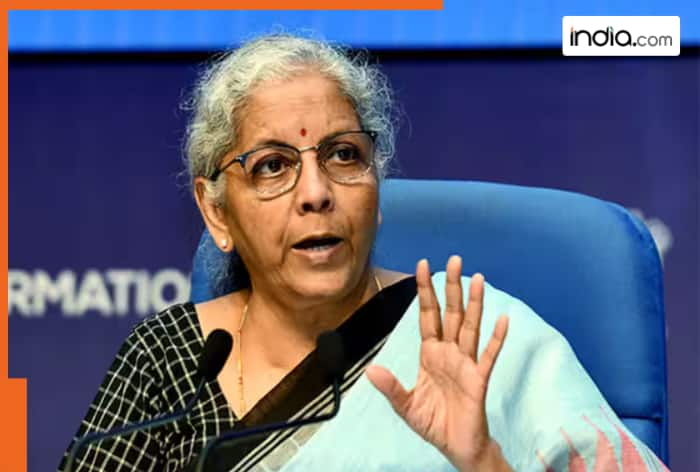
New Delhi: Finance Minister Nirmala Sitharaman tabled the Economic Survey 2026 in Parliament today, on 29 January (Thursday), ahead of the scheduled Union Budget 2026 announcement on 1 February (Sunday). Notably, this will be her ninth consecutive Budget speech and is the first time that the India Union Budget will be presented on a Sunday in at least a decade. The Finance Commission, which has been set up under the Constitution, provides a formula for devolution of taxes between Centre and states. Cesses and surcharge levied by Centre are not part of the divisible pool. The Finance Commission is a constitutional body that gives suggestions on Centre-state financial relations and is set up periodically. The 16th Finance Commission, headed by former Vice Chairman of Niti Aayog Arvind Panagariya, was set up on December 31, 2023.
Anurag Goel, Director, Goel Ganga Developments
For a rapidly urbanising India, this Budget needs to regard housing as essential infrastructure rather than a treatable asset class. PMAY-Urban 2.0 and a multi-lakh-crore commitment for urban housing have already announced the tremendous intent of the government, but now the policy fine-tuning is critical to the supply on the ground matching the intent. Rationalising GST on under-construction homes, increasing the affordable housing price band, and extending the targeted tax deductions for end-users will make the projects workable and the homes available, especially in Tier 1.5 and Tier 2 cities which are becoming the employment hubs. If Budget 2026 provides clarity and stability in these areas, the developers would surely invest in environmentally friendly, high-density and near-transport communities that would be supportive of India’s growth during the next decade.
Vijay Raundal, Managing Director, Teerth Realties
The Indian real estate market anticipates an enormous rise, perhaps up to ₹50 lakh crore by 2030, partly due to RERA 2.0 and the influx of people moving to the cities. Thus, the pre-budget allocations have to change from land banks to tech-driven growth engines that turn the favorable policies into 25%+ YoY revenue jumps. The bitter fact is that 65% of the developers still prefer to waste money on glamorous brochure ads and at the same time are starving for digital stories—like AR/VR property tours, blockchain title deeds, and AI-driven buyer personalization—these are the stories of the platforms like MagicBricks and 99acres that are dominating amid RBI’s affordable housing push. A smart pre-budget plan calls for 40% for proptech like propchain analytics and virtual staging that push conversion 4 times, 35% for sustainability certifications (IGBC/LEED) that allow green home subsidies to be taken, and 25% for hyper-local SEO/PR blitzes that are targeting Tier-2 NCR and Pune boomtowns—releasing ₹10,000 crore untapped demand from NRIs and millennials. The only thing left to do is not to wait too long with cash—spend it right away to be the one who has the story of “India’s next realty renaissance,” or to be the one who has lost the ground to the proptech disruptors changing the skyline!
Aman Gupta, Director, RPS Group
Budget 2026 is a crucial chance to make the homeownership situation in NCR and other high-growth areas much better by giving incentives to buyers, developers and lenders in a more unified way. The mid-income housing projects have a major share of users who are above the ₹45 lakh affordable cap and, as a result, are not getting the benefit of the 1% GST and the tax incentives. If the limit is raised to around ₹90 lakh, the revival of the first-time buyer additional interest deduction like 80EEA, and easing of credit for developers, then there will be a significant reduction in the acquisition cost as well as the EMI burden. When sustained investment in metro, expressway, and urban infrastructure is added to these measures, the demand for housing in the peripheral corridors will be met with faster sales and the sector will enjoy a stable, long-term growth.
Shiv Garg, Director, Forteasia Realty Pvt. Ltd.
The real estate sector is looking for a clear signal from the government regarding the alignment of tax policies with the new urban housing price realities as we approach Budget 2026. The existing limit of ₹45 lakh for the ‘affordable housing’ category and the associated 1% GST benefit do not correspond to the land and construction costs in most of the development areas. A realistic price bracket of ₹80-90 lakh and a reduction in GST rates on works contracts from 18% to 12% can lead to the revival of the projects which are stalled and also the opening up of a new supply pipeline. In addition to this, a higher allocation for PMAY-Urban, along with quicker approvals, will not only benefit the first-time buyer in India’s growing cities but also the entire housing sector as it will lead to more livable and ready-to-move-in homes.
Pinank Shah, CEO, Capital India Finance Limited
As Budget 2026 approaches, we hope the Government takes measures to further strengthen the credit ecosystem for MSMEs and retail customers, where NBFCs play a critical role in delivering last-mile financing.
Some of the key expectations include:
First, extending SARFAESI rights to NBFCs across all loan values. This will help accelerate recovery processes, reinforce credit discipline, and ultimately reduce borrowing costs for customers.
Second, launching a dedicated refinance/liquidity window for MSME-focused NBFCs to ensure steady and cost-effective access to funds for underserved segments.
Third, improving access to long-term funding for NBFCs financing long-tenor assets, which will help ease asset–liability mismatches and support sustainable balance-sheet growth. Finally, putting in place policies to further strengthen digital public infrastructure for credit—through consent-based data sharing and interoperable registries—to enhance underwriting quality and enable faster, more informed lending decisions.
Hiren Joshi, Founder & CEO of Bee Online
The UI/UX and digital SEO industries in India are projected to reach a value of ₹50,000 crores by 2027, and investments in growth strategies prior to the budget are not merely a choice—they are the starting point for beginners to win against the likes of Figma and SEMrush in the post-AI design period. The hard truth is that old-style practices cause 70% of UI/UX and SEO agencies to lose clients, while they do not notice the relevancy of mobile-first personalization, voice search optimization, and GenAI-driven A/B testing that is 3 times more efficient in converting, although customers are asking for hyper-localized services due to RBI’s digital payment expansion. The smart pre-budget strategy involves a 45% allocation to AI-enabled SEO tools that will enable mastery of zero-click searches and core web vitals, a 30% allocation for the no-code platform Framer and AR prototyping UI/UX upskilling, and 25% allocation for data analysis that connects design iterations to 40%+ conversion lifts— this will bring forth unicorns in edtech, fintech, and e-commerce industries. The 5G rollout will ignite gaming interfaces and conversational UX but only those firms that adopt zero-party data and ethical SEO practices will emerge as winners in Google’s 2026 algorithm changes. The bottom line is: either you invest in growth through narratives that blend user-friendly design with search supremacy, or you let your rivals take away the ₹1 lakh crore digital cake—the clock is ticking before Union Budget 2026!
Jeevan Kasara, Chairman, Steris Healthcare
The self-reliance of India in pharmaceuticals and medtech must be accelerated by Budget 2026 with a PLI infusion of ₹10,000 crore for medical devices, which would cover oncology, imaging, and implants, thereby making a reduction of the 70% import dependence possible and at the same time creating a domestic production amounting to ₹1.2 lakh crore by 2030. Overall, a 95% increase in PM-ABHIM funding for rural health infrastructure and zero customs duties on essential APIs will assure the safeguarding of supply chains in the face of climate risks. The extension of Ayushman Bharat to 50 crore more citizens (including gig workers) and R&D credits (up to 200% for the biotech sector) will provide affordable care and turn India into the world’s pharmacy with a market size of $130 billion at the end of the decade.
Anuj Mundhra, Founder, Chairman & Managing Director, Nandani Creation Limited
The apparel retail sector is expected to reach new heights driven by the rapid expansion of e-commerce and omnichannel retail. To sustain this growth momentum, Budget 2026 must accord the highest priority to meaningful GST 2.0 reforms. Rationalization and unification of GST rates across all fashion categories will significantly reduce classification disputes and operational inefficiencies, while simplified compliance norms for MSMEs will ease working-capital pressure.Streamlining GST processes will also enable greater access to trade credit, particularly for smaller players whose eligibility is closely linked to timely GST filings—thereby creating a more level playing field vis-à-vis larger retailers.Additionally, continued investment in modern logistics parks, coupled with a further reduction of GST on freight to 5%, will strengthen supply-chain efficiency and bridge the urban–rural divide. This will make faster and cost-effective deliveries viable for ethnic and lifestyle brands across Tier II–V markets.Finally, rationalization of personal income-tax slabs for the middle class will directly boost discretionary spending, thereby converting into higher demand for both festive and everyday apparel—segments that have already been driving future growth for the Textile industry heading into 2026.
Raghunandan Saraf, Founder & CEO, Saraf Furniture
Budget 2026 will be a golden opportunity for the Indian retail sector to grow as a result of the government taking the burden off the expensively priced home accessories and consumer goods. After the recent reduction in GST on large items like furniture and home appliances, the furniture industry seems to have only one way to go, that is, to make input tax credits and slab rates simple. This will make both showrooms and online platforms equally competitive. The honing of MSMEs credit guarantees up to ₹20 crore and lowering of fees on multimodal transport will bring down logistics costs significantly and also, the speed of delivery will be increased to Tier-2/3 cities where demand is now booming. If tax relief on personal income is given along with the mentioned measures then, there will be no holding back of demand for home improvements and thus, retail sector will be rightly called the consumption powerhouse for the Indian economy.
Ashish Bhutani, CEO, Bhutani Infra
“As we approach the Union Budget, the real estate sector looks forward to policy measures that further strengthen ease of investment, accelerate infrastructure development, and support sustainable urban growth. Continued focus on rationalising taxation, expanding metro and expressway connectivity, and incentivising green and wellness-driven developments can significantly enhance investor confidence. A stable, forward-looking policy environment will be key to unlocking long-term value across commercial and mixed-use real estate while supporting employment generation and economic momentum.









For breaking news and live news updates, like us on Facebook or follow us on Twitter and Instagram. Read more on Latest Business News on India.com.

