


Victor Dasgupta
Victor Dasgupta is an Assistant News Editor at India.com, covering major developments across national politics, edu ... Read More


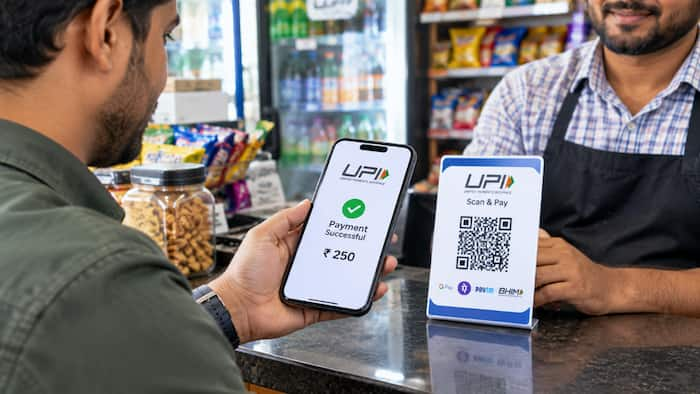
New Delhi: Zimbabwe is reportedly in talks with NPCI International Payments Ltd to use India’s Unified Payments Interface technology for a new real-time payments system, with negotiations potentially concluding by October 31. In mailed reponses to Bloomberg, Reserve Bank of Zimbabwe Governor John Mushayavanhu said that the proposed system would provide common infrastructure connecting banks, mobile-money operators, fintech companies and other payment providers in Zimbabwe, allowing transactions to be processed in real time.
If the talks lead to an agreement, Zimbabwe would use the technology underpinning India’s UPI to develop its own domestic digital payments infrastructure, rather than merely enabling UPI payments for Indian travellers. Central bank Governor John Mushayavanhu said the system is expected to lower transaction costs and make payments faster.
It could also make account-to-account transfers a cheaper alternative to cards for low-value domestic transactions and allow banks to offer services to merchants at a lower cost, he said.
As per the governor, the common infrastructure could support the development of new financial products by banks and fintech firms. Mushayavanhu further added that the country also expects greater digitisation of payments to improve visibility into economic activity by small and medium-sized businesses, giving the government better data to measure their contribution to the economy.
“Zimbabwe’s interest in the adoption of technology for payments through UPI is an affirmation of the efficiency of the digital payments architecture of India, which can serve as a model for other developing countries. This is so because UPI is not just a payment interface; it is an interoperable infrastructure that enables linking banks, fintechs, mobile-money service providers, and merchants instantaneously. For Zimbabwe, UPI can reduce the cost of transactions, promote the digitization of financial services, and facilitate account-to-account payments. This is also an indication of the increasing importance of India in the export of digital public infrastructure in the times to come,” Rohit Mahajan, Founder and CEO, plutos ONE
The IIT-Madras hosted an event to celebrate the arrival of ‘Cashless Nation: How UPI Changed Everything’, a new book chronicling the conception and remarkable rise of India’s Unified Payments Interface.
Co-authored by IIT-M alumnus and technologist Santanu Paul and veteran career banker B Sambamurthy, the Penguin Random House publication coincides with the 10th anniversary of the UPI ecosystem.
Hosted by IIT-M Director V Kamakoti, the campus event was attended by former RBI Governor C Rangarajan, former WHO Chief Scientist Soumya Swaminathan, and BSE India MD and CEO Sundararaman Ramamurthy.
Delivering the keynote, Rangarajan called the book a “brilliant narrative” of the events, policies, and personalities behind UPI. “It is an envy of the world now, and open to everyone from a street vendor to a billionaire,” he said, praising its engaging storytelling.

For breaking news and live news updates, like us on Facebook or follow us on Twitter and Instagram. Read more on Latest Business News on India.com.
