 English


Mallika Mehzabeen
Mallika Mehzabeen is a passionate Senior Sub Editor with Zee News. With over 5 years of experience she covers entertainment and lifestyle section. Her work revolves around bringing the latest updates, ... Read More


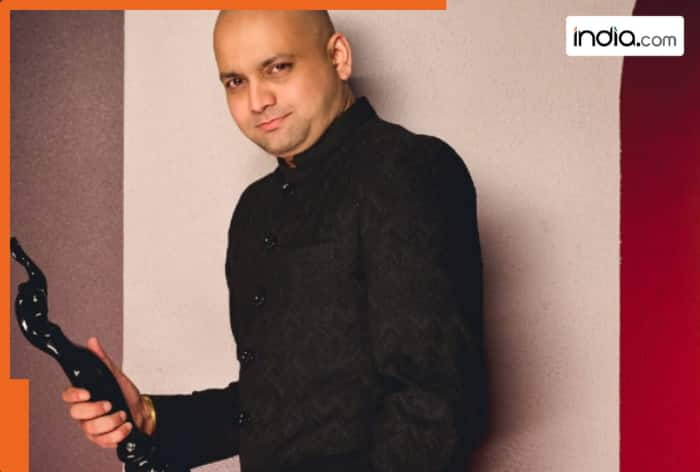
There are a bunch of politically driven movies which touch the core of the audience, especially when the subject is Kashmir. From Mission Kashmir (2000), Kaafila (2007), to Haider (2014) and Hamid (2018), there are various films which had their storyline based on the unrest in Kashmir, but only a few of them turned into huge hits which the audience loved and related to. One such movie was Article 370, directed by Aditya Suhas Jambhale. His film was a political thriller showcasing the events leading to the abrogation of Article 370. Now, films that have a political angle involved are always on the verge of getting criticism or admiration. Speaking on the same, in an exclusive interview with India.com, Aditya Suhas Jambhale reflected on his perspective on working on a political thriller.
When we asked Aditya that while directing a movie like Article 370, which not only involves people’s emotions but also has a political hint to it, did he ever fear backlash, the director replied, “Nahi mujhe ulta tha, that if a conversation or division of views starts because of the film, then it’s a good thing. I mean it strikes a conversation, whether this is right or wrong. I think this is what defines our country as a democracy, and this is the same thing which follows when it comes to entertainment. I also feel that backlash, resistance, criticism is something which is a part of the game, and I was always ready since the day I decided to make the film.”
Jambhale further added, “Since I had an opinion, even in Article 370, people often said that I tried to back the decision which was made by a government, and that means you (Aditya) are taking a side. I am taking a side of course, but I am taking the side of the decision. I am not taking the side of a political party or a particular government. If a government does something good, which I also feel the same, then I will do the film.”
Aditya emphasised why filmmakers should have opinions instead of journalists and said, “And also, I feel that there is this weird expectation from a filmmaker that he has to be neutral and shouldn’t emphasise his opinion. The reason why a filmmaker should do a film is because he has an opinion about that particular story, especially when it comes to a political story. That is what one should expect from journalism. A journalist should be neutral. They should just say things like they are instead of it being right or wrong. On the contrary, a filmmaker — why it is an art and why he wanted to do that film — is because he has an opinion.”
He concluded by saying, “Sadly in our country, journalism has become films, where trailer music is running in the background, and they are shouting on the story about why it is good or bad.”
For the unversed, Aditya’s recent directorial Baramulla on Netflix has received mixed responses. The film is a combination of thriller with supernatural elements, the two genres which are rarely seen together.
The film is set in the snow-covered town of Baramulla in Kashmir, where a young boy — the son of a local (ex-MLA) politician — disappears suddenly during a magic show. The case is handed over to a newly transferred police officer, DSP Ridwaan Sayyed (played by Manav Kaul). He moves to Baramulla with his wife, Gulnaar, and their two children: daughter Noorie and son Ayaan. The family is given an old villa to live in, a house with a past — and soon, strange, unsettling events begin to plague their home.
Baramulla stars Manav Kaul, Bhasha Sumbli, and Arista Mehta in key roles.
For breaking news and live news updates, like us on Facebook or follow us on Twitter and Instagram. Read more on Latest Entertainment News on India.com.