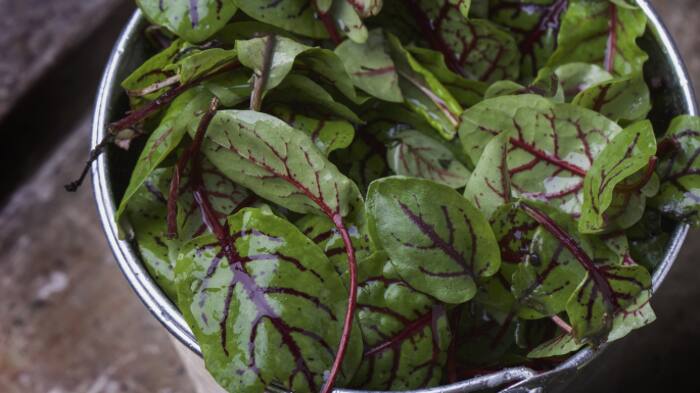
The annals of fine dining are about to be marked with yet another entry: red ribbon sorrel. After spinach and kale, red ribbon sorrel is considered the next super food of the culinary world. Used mainly in salads and soups, restaurants are already making special additions with these red leaves while organic farmers are being bombarded with high demands for sorrels.
This perennial herb—which belongs to the genus, Rumex—looks like a spinach but is distinguished by its red lines. Along with a crisp and succulent texture, red ribbon sorrel contains oxalic acid, which gives it a distinctly sharp and tangy taste.
Red ribbon sorrels are often seen in gardens as a decorative plant. Since they need little attention, they can grow both in warm areas and under cool climates as long as they are surrounded by moist soil. Red ribbon sorrels can grow anywhere between 60 centimeters to one meter, under good conditions.
Nutritional value
Red ribbon sorrels are low in calories and rich in fiber, with a small amount of protein as well. They are also good sources of vitamins A, B6, and C, iron, magnesium, potassium, and calcium.
Health benefits
Rich in vitamins and minerals, these sorrels have innumerable health benefits.
Eyesight – Since it is a good source of Vitamin A, which is a vital to keeping your vision healthy, sorrels can boost your eyesight and prevent cataracts. It can also help prevent age-related eye issues.
Strengthens your immune system – It is believed that one cup of sorrel contains 106 percent of your daily recommended intake of Vitamin C. Since Vitamin C plays a major role in boosting your immune system, sorrels can act as your “bodyguards.” It increases the amount of white blood cells, which act as warriors against any kind of foreign bodies invading our body.
Improves digestion – With its high amount of fiber, sorrels are a great reliever for conditions like constipation, diarrhea, bloating and many other gastrointestinal afflictions.
Treats skin diseases – Because of the high amount of Vitamin A and C, this leafy green can help heal many skin conditions like ringworm, itchiness, and even dry skin. You can either take dried sorrels as an herb or squash the leaves and place its liquid on the wounds.
Lowers blood pressure – One cup of sorrel has 15 percent of your daily recommended intake of potassium, which is a key agent in lowering your blood pressure.
Apart from these, red ribbon sorrels can slow the aging process, prevent diabetes, promote heart strength, and improve kidney health.
However, there is a word of caution—sorrels are rich in Oxalic acid, which can be toxic if consumed in large quantities and can increase the risk of kidney stones. Additionally, when cooking sorrels, it is advised not to use cast iron or any kind of aluminum cookware since interaction with metal can cause metallic reactions.
So, keeping these cautions in mind, try adding a bunch of sorrels to your weekly meal plan and see for yourself how much it can improve your health!
By clicking “Accept All Cookies”, you agree to the storing of cookies on your device to enhance site navigation, analyze site usage, and assist in our marketing efforts Cookies Policy.