


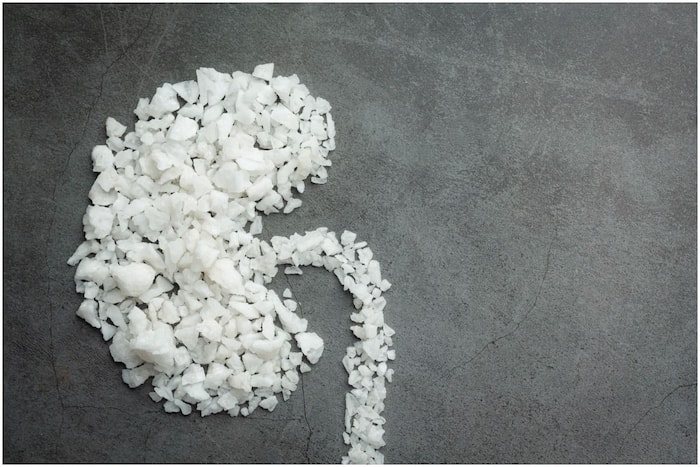
Kidney stones occur when solid salt and mineral deposits develop inside the kidneys. Typically, kidney stones develop as the urine becomes concentrated, causing crystal-forming minerals like calcium, uric acid and oxalate to gel and stick together. Accordingly, kidney stones can impact several urinary tract areas, including the kidneys to the bladder. Major causes of kidney stones include age, lifestyle, pre-existing medical conditions or external seasonal factors. Particularly, one must exercise greater caution during summer, as severe heat may increase the risk of kidney stones due to rapid fluid loss through sweat and uric acid build-up in the urine. Accordingly, kidneys retain the body’s water levels through concentrated urine, leading to kidney stone formation. Therefore, individuals must replenish common fluid loss during summers through proper hydration to minimize risks.
Typically, kidney stones show no visible symptoms. However, stone movement within the kidneys or stones in the ureters or tubes linking the kidney and bladder can interrupt urine flow and cause kidney swelling. Therefore, common early symptoms to look out for include stabbing pain below the ribs, the side and the back. Also, burning sensations and pain during urination can occur. Other symptoms include urine abnormalities like excessive urination, red, brown or pink, cloudy and smelly urine. However, severe pain, urine blood or urination troubles, pain alongside fever, chills, and nausea symptoms require timely medical attention.
Doctors may conduct relevant diagnostic tests like blood, urine and image tests such as ultrasounds or CT scans, alongside lab analysis of passed stones for the required treatment. Treatment options depend on kidney stone size and the cause. Largely, small stones and minimal symptoms do not require invasive treatments. Instead, the doctor may advise drinking up to 1.8-3.6 litres of water to dilute urine and prevent stone formation and taking pain relievers to relieve discomfort symptoms when passing small stones. Lastly, prescribed alpha-blocker medications that relax ureter muscles and help pass kidney stones are another non-invasive treatment option.
Alternatively, extensive treatment options are necessary with large and difficult to pass stones, due to severe visible bleeding, kidney impairment or regular urinary tract infection symptoms. Primarily, sound wave procedures, ESWL (extracorporeal shock wave lithotripsy) & laser lithotripsy procedures can help break stones. RIRS (Retrograde Intrarenal Surgery) is the most advanced treatment modality where no incision(cut) is involved, a flexible ureteroscope is used to locate the stone and a laser is used to break it within the body. Post the procedure with laser, it is key to remove the larger stone fragments with stone retrieval devices and the smaller ones come out on their own with urine. Dilation devices and access sheaths might be used during ureteroscopy procedures.
(Inputs by Dr T. Manohar, Chairman, SCUG: Silicon City Urology Group, Urologist – Endourologist, Laser & laparoscopic surgeon, Robotic surgeon and Renal Transplant Surgeon)

For breaking news and live news updates, like us on Facebook or follow us on Twitter and Instagram. Read more on Latest Health News on India.com.