


[Photo Source: Screenshot via YouTube.com]
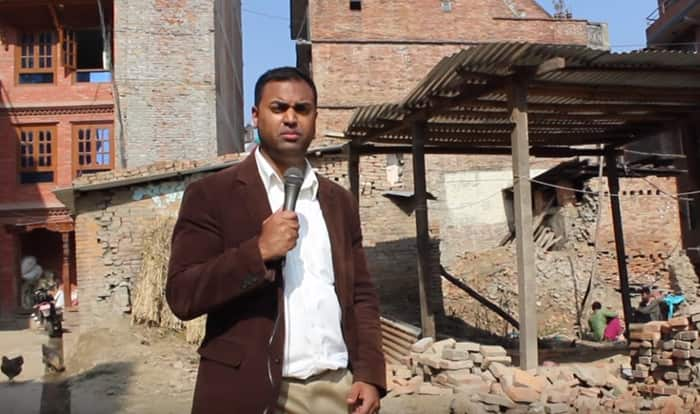
Sovy Azhath, producer/writer at CNN in New York, was reporting on the field in the village of Bhaktapur, about15 miles from the capital city of Kathmandu in Nepal, when he met an 80-year-old man living in hazardous conditions and in the rubble along with his wife just a few months after the catastrophic April 2015 earthquake. His reporting brought to light how grave the situation is for the citizens.
On April 25, 2015, the Asian country was rocked by a 7.8 magnitude earthquake that killed 8,000 people, injured more than 21,000 and caused massive destruction to property. Considered as the worst natural disaster to affect the region since the 8.0 magnitude earthquake, which hit in 1934, this one destroyed several UNESCO world heritage sites like the Kathmandu Durbar Square, Swayambunath Stupa, and Changu Narayan Temple.
A number of people were left homeless and in despair after their villages were destroyed. In this situation, they relied on the government, NGO’s, and other organizations like Red Cross and Doctors without Borders for basic provisions like food and shelter and health treatments. India, as a neighboring country, immediately sent relief material with the help of the Indian Army. Through Operation Maitri, aid materials like food, water, insulin, blankets, oxygen cylinders etc were provided. Medical teams were sent in, field hospitals were built, and over 20,000 Indian citizens were evacuated by the Indian Air Force.
However, the people are still suffering the brunt of this earthquake. Amidst all this was India’s blockade to Nepal, supported by the United Democrat Madhesi Front, a coalition of political parties which represent the ethnic Madhesi’s who are in protest of the new Nepali constitution. This led to a severe humanitarian crisis in the country, only adding to the woes of the citizens. The blockade stopped the supply of petroleum from India, a country on whom the land-locked country relies on for fuel. This led to subsequent choking on the supply of food, medicines, and other relief material. Usually, around 300 trucks a day would take the supplies across the Indo-Nepal border which dwindled down to 5-10.
In this video, Azhath puts forth the voice of the 80-year-old man and his memories of the day tragedy struck. His experience of how the roads were shut and they had nowhere to go jolts us back to the harsh reality. His daughter-in-law recounts the panic that took over as soon as the earthquake happened. We also get a closer look at their unfortunate and unsafe living conditions. They reconstructed their house from the rubble but it didn’t help much. India’s blockade of fuel and gas caused their biggest worry and clearly the people are angry because the economy has suffered. Last month, UNICEF released a statement that said that more than three million people are at the risk of death and disease in Nepal due to its harsh winters and lack of fuel, food, and medicines.
Finally, the Madhesi Front has decided to end the blockade on Monday so that supplies can reach the citizens and aid them. However, they have said that they will continue to protest and oppose the new constitution.
Azhath’s reporting and video bring to light the crucial circumstances faced by Nepali’s since the months after the earthquake. It is definitely a gateway to opening up a dialog on how South Asians as a community can contribute and help our neighboring country.


For breaking news and live news updates, like us on Facebook or follow us on Twitter and Instagram. Read more on Latest Lifestyle News on India.com.
