





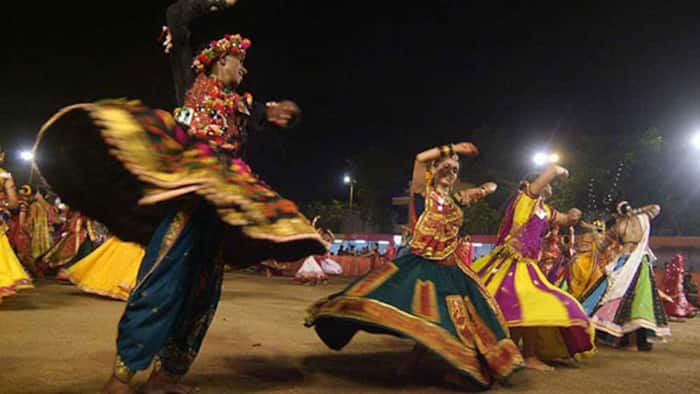
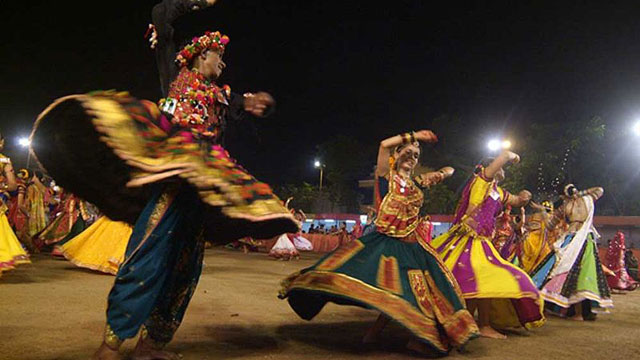
Held in honour of Goddess Durga, Navratri is a major festival in Gujarat, Mumbai and West Bengal
It is celebration time once again. The festival of Navratri comes with the promise of nine days of non-stop fun, dance and festivities.
The beginning of spring and beginning of autumn are taken as sacred opportunities to worship the Divine Mother, Durga. Navratri festival celebrates Goddess Durga, the manifestation of Shakti. Navarathri is celebrated five times a year. However, the Vasanta Navaratri and Sharada Navaratri are very important.
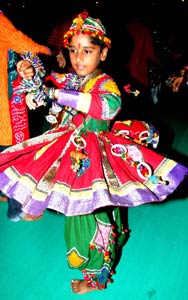
Dandiya is actually the staging of mock-fight between the Goddess and the demon Mahishasura
Navratri is a major festival in Gujarat, Mumbai and West Bengal. Held in honour of Goddess Durga, dance and music are an important part of the festivities.
Travel.india.com suggests three things to do this Navratri.
Dandiya Raas
What is Navratri without dancing in gay abandon to the beats of dhol and traditional Dandiya songs? Women decked in colorful embroidered choli and ghagra and men wearing turbans and kedias gracefully swaying to the music, is a sight to behold.
Performed in Goddess Durga’s honour, Dandiya is actually the staging of mock-fight between the Goddess and the demon Mahishasura. The origins of Raas can be traced to the times when Lord Krishna performed Rasa Lila (Lila means Lord Krishna’s playful dance) with Gopis of Vrindavan.
Though there are several forms of Raas exist, but Dandiya Raas performed during Navaratri is the most popular form. In Dandiya, men and women dance in two circles, with sticks in their hands. During the dance, dancers energetically whirl and move their feet and arms in a complicated, choreographed manner to the tune of the music with various rhythms.
Men and women join in for Raas Dandiya, and also for Garba. The circular movements of Dandiya Raas are much more complex than those of Garba. And there is another difference. While garba is performed before Aarti, Dandiya is performed after it, as a part of merriment.
It is common to think that Raas has to be fast, but that is not the case. Grace and slow movements are just as important.
Garba
Similar to Dandiya, Garba is also performed in honour of the goddess in Gujarat. the dance is traditionally performed around a clay lantern with a light earthern lamp, called the Garbha Deep. The lantern stands for life.

Garba is danced to honor the fact that all humans have the divine energy of Devi within them
Ever wondered why the Garba and Dandiya are performed in a circle? Reason: Circle stands for the Hindu view of time. Life progresses from birth, to life, to death and again to rebirth; however, the only thing that remains constant is the divine or in this case, the goddess.
The Garbha Deep has another symbolic interpretation. The lighted lantern represents the body and the divinity that resides within it. Garba is danced to honor the fact that all humans have the divine energy of Devi within them.
Garba is the one of the most colorful dance forms performed by both men and women. Starting with a slow tempo, the energy level of participants increases with the fast beat and tempo of the music. Fluid movements, hands clapping in unison, bodies gracefully swaying
to the music, arms coming together in beautiful sweeping gestures; nothing can match the grace of Garba.
Garba is performed throughout the nine nights of Navaratri. Vadodara, the cultural capital of Gujarat is the best place to perform or witness Garba
Navrathri Music Festival, Thiruvananthapuram
It might not have the razzmatazz associated with Dandia Rass or Garba; however, Navratri festival at Thiruvananthapuram scores high on music and culture. Swathi Sangeethotsavam, the nine-day musical fiesta, is held at the Navarathri Mandapam located inside the East Fort in Thiruvananthapuram.
For nine-days, Thiruvananthapuram resonates with Carnatic music. Music aficionados from various parts of South India gather to witness some of the best works in the field of dance and music. The kritis (compositions) of Travancore Maharaja Swathi Thirunal, who was renowned as the prince among poets and poet among princes, figures high on the list of songs played during the festival.
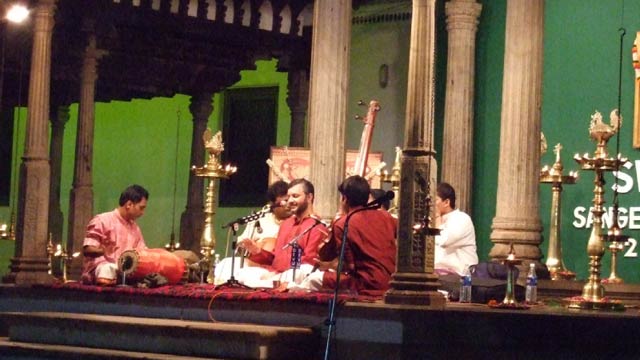
Swathi Sangeethotsavam held during Navratri scores high on music and culture
Music for Navaratri concerts was composed by the Maharaja himself. Swati Tirunal composed nine keerthanas in nine different ragas to be sung as the main piece on each day of Navaratri. Recital of Thodayamangalam by Mullamoodu Bhagavatars, traditional musicians attached to Padmanabha Swamy Temple, precedes the concerts.
Though open to all, certain rules and regulations apply with regard to seating, attire and timings since the venue is a Hindu temple.
Dhunuchi dance
Nothing can beat the fervour and thrill that comes while watching devotees performing Dhunuchi dance during Durga puja. The dhunuchi dance is performed during evenings after the aarti and is unique to Bengal.
Performers dance with clay pots filled with burning coconut coir shells or coals in their bare hands in front of the deity. The resounding drums beat, the clanging of cymbals and chime of bells keeps the performers charged.
The scene is electrifying and the mood contagious and spectators often join to become the performers. Easy it might seem; however, it requires skill and high amounts of energy to balance the earthen receptacles while maintaining the rhythm.
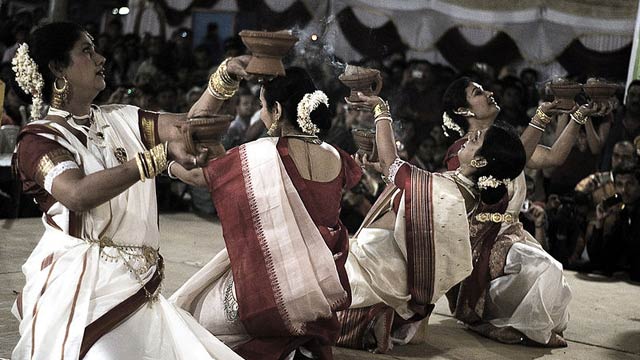
Dhunuchi dance is performed during evenings after the aarti and is unique to Bengal







For breaking news and live news updates, like us on Facebook or follow us on Twitter and Instagram. Read more on Latest Lifestyle News on India.com.
