


Moradabad | November 2025
The 14th International Conference on System Modelling and Advancement of Research Trends (SMART-2025), yet another milestone in the long running international conference series. Held in a hybrid format and indexed by the Institute of Electrical and Electronics Engineering (IEEE), the conference witnessed the gathering of academicians, researchers, engineers and professionals from industry from across India and the globe. It was a dynamic platform for exchange of ideas, research findings and innovations dealing with both existing challenges and future directions in emerging technologies.
SMART 2025 reflected the increasing cross disciplinary nature of modern research in such essential areas as computational sciences, system modelling, Industry 4.0, information security, Internet of Things (IoT), Blockchain Technologies, Robotics, Biomedical Engineering and Digital Image Processing. The hybrid format made it possible for a wide range of participants from many different professional and geographic environments to both present their work and participate in substantive scholarly discussions with fellow participants. Research papers that were accepted after a rigorous process of peer reviews were submitted for publication in the journal, namely, the journal of the Institute of Electrical and Electronics Engineers, International Conference on Intelligent Robots and Systems, known as the “IEEE Xplore,” which highlights the strong international academic status and practical research relevance of this conference.
SMART-2025 Focus Areas
The conference continued to have a high emphasis on emerging and applied technologies, with technical sessions in areas such as system modelling and design implementation, Industry 4.0, information security and engineering, IoT and wireless communication, blockchain technologies, governance and compliance frameworks, robotics and automation, biomedical engineering, and digital image processing. The wide range of themes promoted multidisciplinary interaction and benefited research-based approaches for dealing with complex, real-world problems.
One of the other showcases of SMART-2025 was the Best Paper Awards, used to recognize excellent research at the conference. They were initiated through a stringent peer-review process, and subject-matter experts tested them on technical originality, research significance, quality of implementation, and overall contribution to the field.
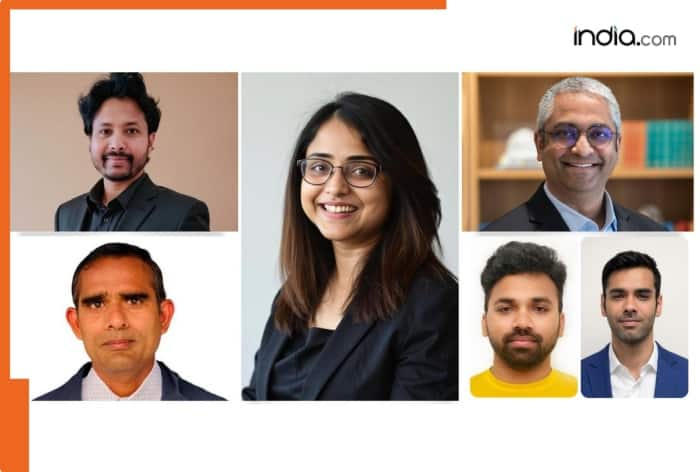
SMART-2025 Best Paper Award Winners:
“Privacy-Preserving IAM in Hybrid Applications via Federated Learning”
Author: Suchismita Chatterjee, WWT/PG&E , USA
(Information Security & Engineering Track)
This paper proposed an identity and access management (IAM) novel architecture. The strategy was pegged on federated learning to eliminate centralized holding of identity data. This is a major threat to privacy of the current systems. The solution allowed authentication to be secure and scalability in mixed environments. It also seeks to maintain the sovereignty in user data. This introduces a fresh privacy-by-design standard in enterprise IAM.
“AI-Augmented Compiler Optimization for Energy-Efficient Software Execution on Embedded Systems”
Authors:
Satish Kumar Malaraju, Technology Architect (DevSecOps), VHL Technologies Inc., Texas, USA
Shiva Kumar Madishetty, Advanced Embedded Software Engineer, Steris Corporation , USA
(Industry 4.0 Track)
This was one of the earliest works to use artificially intelligent technology in compiler design. The project will attempt to assess and streamline energy efficiency and performance within embedded systems. It is tackling practical industrial and resource limitation issues. The study represented an operational strategy of machine learning based on the customization of compilation approaches. It was also able to offer a realistic road map towards intelligent and energy conscious computing with regard to Industry 4.0 objectives.
“Machine Learning-Based Leak Detection in Urban Water Distribution Networks”
Authors:
Tanay Kulkarni, Asset Management Consultant, Freese and
Nichols, Inc., Fort Worth, Texas, USA
Ayush Singh, Civil and Environmental Engineer, AECOM , USA
Suchith Goud Arella, Senior Software Engineer , USA
(System Modelling and Design Implementation Track)
A machine learning and system modelling protocol of predicting early leakage in large urban water distributions networks was proposed in the paper. The model that has been described in paper is industry ready. It is merging information-intelligence with infrastructure modelling. The strategy resulted in the enhancement of operational efficiency, conservation of water, and reliability of assets. This illustrates the revolutionary nature of the AI as it is applied in the modernization of important critical infrastructure in the society.
Having a large international involvement rate, strong academic standards, and focusing on transformational technologies, SMART-2025 was confirmed as a valuable arena of research and innovation of system modelling and emergent technologies.

For breaking news and live news updates, like us on Facebook or follow us on Twitter and Instagram. Read more on Latest Money News on India.com.