


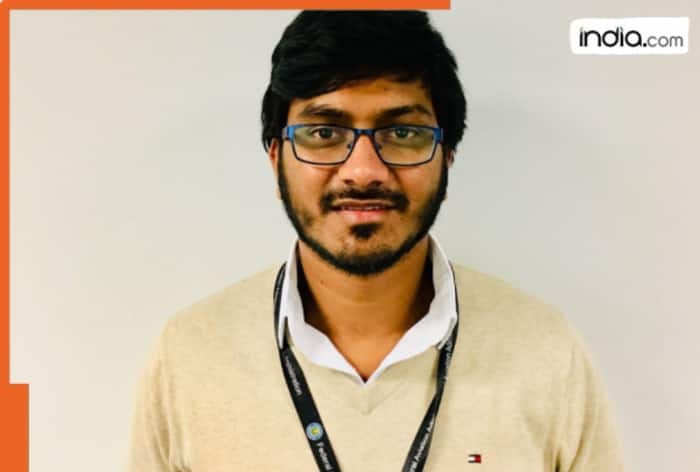
Harish Bonikela is an accomplished Software Engineer from Houston, Texas, with expertise in end-to-end software application development and cloud maintenance. Harish is one among the few to mix academic glory with profound industrial experience; his educational background includes a Master’s in Computer and Electrical Engineering from Texas A&M University-Kingsville. He is a known asset in his professional career with important contributions in large-scale software projects, where he has showcased his strong skills in frontend development, microservices architecture, performance optimization, and technical leadership.
Q1:What prompted you to choose a career in software engineering?
A:My motivation to pursue a career in software engineering comes from solving difficult problems and building innovative solutions. I have always had a keen interest in how technology shapes a business or assists in improving user experiences. The very nature of the software development world is fast-paced and ever-changing, which is a lot of fun because it gives me the opportunity to learn and grow while contributing meaningfully to the applications I create. What I really look forward to is getting to work with exciting technologies and frameworks that allow us to create better solutions with higher performance and scalability.
Q2:What approach do you take in project-related technical architecture decisions?
A:When it comes to architectural decisions, I put particular emphasis on scalability, performance, and maintainability. For example, one of the recent projects I worked on involved designing a scalable microservices architecture that improved system resilience by 20% while also decreasing latency by 30%. I like to analyze the requirements in detail, taking into account future scalability necessitated and selecting technologies that best serve its long-term goals. This includes the making of proof-of-concept applications and designing their monitoring capability from ground up.”
Q3:Tell us about a difficult project you had to manage and how you managed to mitigate the challenges you faced.
A:Some of the hardest projects were involved with developing a micro-front codebase for a fintech platform that managed 10,000+ transactions daily. Performance vs. scale was the dilemma we had to fight all the way through. One of the solutions I brought was a new deployment scheme that kept deployment time below 3 minutes and increased customer experience and system stability for a 20% bump in annual revenues. Key to this was implementing strong monitoring systems and fine-tuning our microservices architecture to efficiently handle high-volume transactions.
Q 4: How do you ensure code quality and security in your applications?
A: Code quality and security are two important factors in my approach to Development. I ensure comprehensive testing across the application through automated testing tools like Jasmine, Jest, and Karma for unit testing. Apart from this, I schedule regular vulnerability scans using tools, for example, with Datadog, and wide-ranging reviews of code. It emphasizes the writing of legible maintainable code while committing to following security best practices in industry. Audits are frequently done for security; integration with automated testing pipelines would ensure high standards in all our applications.
Q 5: How do you keep pace with turning web technologies?
A: I keep in touch with technology developments. I engage with new frameworks – angular, react, and node.js. I search for new tools and methodologies.
-Advancing my technical skills gets me to technical conferences, through various industry leaders, and practicing using new technologies-I practically use them, i.e., I did Redux architecture and ngRx in Angular applications for more modern development standards.
Q 6: What role does performance optimization play in your development process?
A: Performance optimization is an essential ingredient for quality user experience. I also proceed with API response time reduction and state management optimization while developing frontend code. So far, in my work, I have optimized several features like reducing HTTP response time to less than 3ms, to which services have been introduced to minimize all integration hops. These include a performance audit done regularly and optimized intermittent critical rendering path configurations.
Q 7: How do you go about working collaboratively with other people in your team and the sharing of knowledge?
A: I know that collaboration makes a project successful. I practice openness in communication with regular sharing of knowledge sessions and having clear documentation. I will participate very actively in design discussions and encourage input from all team members. Most integration patterns and ideal API designs have emerged from such collaboration in our projects. I also involve mentoring junior developers and creating a culture of continued improvement.
Q 8: What advice would you give to aspiring software engineers?
A: My advice would be to build a strong foundation in core programming concepts while staying adaptable to new technologies. Focus on understanding data structures, algorithms, and object-oriented programming principles. Additionally, develop good problem-solving skills and learn to write clean, maintainable code. Stay curious about emerging technologies and never stop learning. Practical experience through real-world projects is invaluable in this field.
Q 9: How do you handle complex technical decisions and trade-offs?
A: When facing complex technical decisions, I analyze the problem from multiple angles – performance, maintainability, scalability, and business impact. I believe in making data-driven decisions while considering both short-term needs and long-term implications. I also value team input and stakeholder feedback in the decision-making process. Regular architecture reviews help ensure we’re making the right technical choices.
Q 10: What are your future goals in software engineering?
A: My goal is to continue pushing the boundaries of what’s possible in software engineering, particularly in building scalable and efficient web applications. I’m passionate about mentoring other developers and aim to take on more technical leadership roles where I can influence architectural decisions and drive innovation. I see myself contributing to larger-scale projects that can make a significant impact in the industry.
About Harish Bonikela
Harish Bonikela is a skilled Software Engineer with extensive experience in full-stack development and cloud technologies. His expertise spans across multiple technologies including Angular, React, Node.js, and various testing frameworks. With a strong foundation in computer science and engineering principles, Harish has consistently delivered high-performance applications and innovative solutions throughout his career. His commitment to technical excellence, continuous learning, and team leadership makes him a valuable contributor to the software engineering community.

For breaking news and live news updates, like us on Facebook or follow us on Twitter and Instagram. Read more on Latest Money News on India.com.