


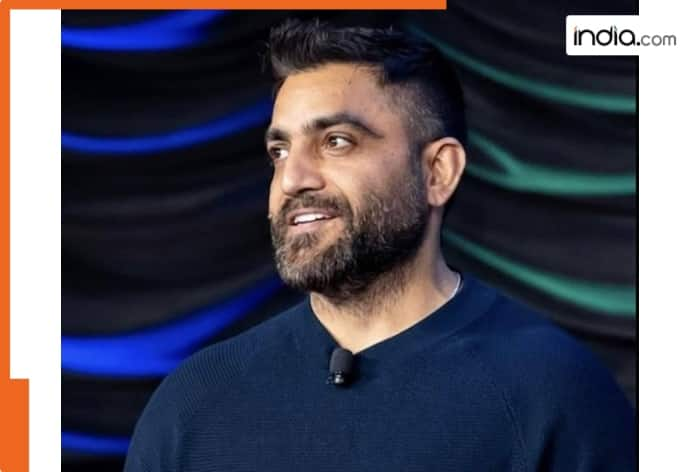
With the increasing use of online platforms across businesses, schools, and public-sector offices, automation tools are becoming indispensable. Goldy Arora, now a Customer Engineer at Google, has spent over a decade building solutions that reduce manual work for millions.
In 2025, Google Workspace is experiencing one of the most notable rises in a decade: in July, the platform was officially recognized as a leader in the Forrester Wave: Unified Communications as a Service report, receiving top marks for strategy, security and AI integration, and Google published fresh data on Workspace expansion in developing regions, where India entered the top-3 fastest growing markets in terms of the number of new corporate domains. Today, the service is used by more than 3 billion accounts and over 10 million organizations, and the share of corporate and educational domains is growing annually.
These data show that automation and digital management are very important globally, it is a big part of how things are changing in engineering. Therefore, the problem of the lack of highly qualified engineers who create tools that cover the real operational pain of organizations comes to the force. Goldy Arora, a Customer Engineer at Google, is just such a specialist, whose products, Ok Goldy, Classright and G License Manager are used by more than 21 million users worldwide, including Indian schools, universities, technology companies and government agencies. These tools emerged from one person’s attempt to fix problems everyone else accepted as unavoidable. What is used daily is becoming more functional and convenient, which makes users happy. As India builds one of the world’s largest digital ecosystems, Arora’s journey offers a rare look at how small, practical innovations can reshape entire sectors, from classrooms to government operations, and become indispensable for IT administrators and teachers around the world.
Automation tools that redefine daily admin work
Against the backdrop of the rapid growth of the Workspace ecosystem, where automation is becoming an infrastructural necessity rather than a luxury, Goldy Arora’s developments look more than just useful – they form what administrators themselves call the new standard of daily work. His journey began back in the 2000s, when he chose a narrow specialization – managing and supporting G Suite (now Google Workspace). At that time, many operations were still performed manually, markets were fragmented, and corporate IT processes lacked consistency. Even today, large organizations operate with thousands of users, complex permission models, and multi-layered group structures, all of which create a constant burden on administrators. Goldy Arora quickly realized that without their own tools, administrators would continue to spend hours on tasks that should theoretically take minutes – assigning licenses, updating organizational units, bulk-modifying groups, onboarding new employees, and managing permissions across entire departments.
This approach later shaped all of Goldy Arora’s work. What started as small helper scripts for individual companies eventually evolved into full-scale tools now used worldwide. One of his first widely adopted solutions was a set of administrative automation features designed to eliminate repetitive work and allow admins to operate at scale.
“Google Workspace admins often have to repeat the same tasks hundreds or thousands of times. Bulk operations should be the norm, not the exception. Therefore, a series of API scripts was created,” Arora Goldy commented.
These API scripts bypass platform limitations that traditionally force admins to perform changes user-by-user. They allow bulk updates of licenses, groups, roles, organizational units, and classroom configurations – all through clean interfaces that hide the complexity of the Admin SDK, a toolkit that lets developers build and automate administrative functions. Instead of writing scripts or manually editing hundreds of accounts, administrators can complete the same workload in seconds. For organizations, this means faster onboarding, cleaner permission structures, fewer errors, and significant time savings. For admins themselves, it eliminates the stress of repetitive manual operations that traditionally dominate their day.
This has increased the need in the industry for engineers who not only work with the platform but also eliminate its weaknesses by creating tools that meet the needs of millions of users. As the administrative load in companies grew, so did the need for scalable, user-friendly tools. For this purpose, Goldy Arora developed the Ok Goldy ecosystem – today it is a set of automation solutions used by over 15 million administrators and employees of organizations around the world. The amazing thing is that these tools remain free, which makes them especially important for government agencies and small companies in India. Many administrators call them “salvation” because they turn multi-step Admin SDK processes into simple actions that are accessible even to beginners. In fact, OK Goldy is an add-on that turns low-level API calls into ready-made functions that are accessible even to those who do not know how to program. That is why competitors in the market directly compare their products with Goldy Arora’s developments, recognizing that it was he who laid the foundation for the Google Workspace automation segment, which is now becoming a trend in the global cloud industry.
Frameworks improving education
Automation has also reached education. Goldy Arora considered it his duty to simplify the work of school and educational services, which he once studied himself and noticed the shortcomings. In most Indian schools, teachers spend more time managing digital classrooms than actually teaching. Tasks like adding students, updating class lists, restoring access, tracking attendance and reorganizing groups often take hours every week. When multiplied by hundreds of classes and thousands of learners, this administrative burden becomes a silent reason for teacher burnout – a challenge rarely addressed in discussions about digital education.
This is how Classright appeared, an add-on for Google Sheets designed by Goldy Arora to manage the Google Classroom educational platform. It allows teachers without programming skills to perform bulk operations with classes and students directly from the spreadsheet. Currently, the tool is used by more than 3 million teachers. This development does not just automate Classroom activities: it reflects a deep understanding of how modern education works. This is especially important in India, where Google Classroom is one of the key platforms in schools and colleges. By being completely free, Classright also removes the financial barrier that prevents many low-budget schools, especially rural and government institutions, from accessing advanced digital management tools. This expands educational equality: automation becomes available not only to well-funded private schools, but to any teacher working with a Google Classroom account.
The country has one of the largest school systems in the world: for example, the Montessori School in the Indian city of Lucknow is listed in the Guinness Book of World Records as the largest school in the world, with 50,000 students in its main building. It is almost impossible to teach and interact with so many students, and it is teachers who face the maximum workload during the digital transformation period. Classright is becoming a tool that allows educators to work with hundreds and thousands of students without burnout – and this is one of the most tangible examples of the direct social impact of Goldy Arora’s engineering work.
The topic of education is very important for an engineer: in addition to facilitating the work of educational institutions, he shares his knowledge and talks about his developments in a personal blog on the YouTube Channel, which has over 3.2M views.
“The channel offers practical solutions to real-world administrative problems, video tutorials, and life hacks, and its success has led to recognition by Google itself, including the use of features in Google’s official videos and invitations to training webinars,” Arora Goldy commented.
Experience as an industry standard
Goldy Arora’s active social participation and assistance led him to become a valuable asset in the industry, and his desire to share knowledge grew into great expertise. So, he started conducting official webinars and was included in a series of instructional videos, “Tips From A Googler” from Google. In the public sector, his report on Zero Trust at GovSec 2025 was included in the program along with speeches by senior US government officials, and about 250 representatives of government agencies listened to his presentations.
Many of Arora’s projects were carried out under NDA, but they all shared one thing: organizations trusted him with the parts of their systems that affected real people like teachers, doctors, students, and employees who depended on stable digital tools every day. These projects were “unusual” not only because of strict security rules like HIPAA or FERPA, but because every error could disrupt someone’s work or learning.
This experience shaped his second mission; teaching young specialists to handle such responsibility. In India, where qualified administrators are still in short supply, his mentorship helps build the human foundation needed to support the country’s growing digital infrastructure.
Technologically, he has created solutions that help tens of millions of users today. Socially, reduced costs and increased the sustainability of the digital environment for enterprises. Educationally, he has formed a huge knowledge base, which continues to develop specialists in different countries, including India.
In fact, this is a rare case when tools are created, and a whole trend of technological culture is being formed – a culture of automation, open knowledge exchange and accessibility of digital technologies. And it is becoming critically important for countries undergoing major digital reform.

For breaking news and live news updates, like us on Facebook or follow us on Twitter and Instagram. Read more on Latest Money News on India.com.