



Nivedita Dash
Nivedita Dash is an Assistant News Editor at India.com, where she leads a dynamic editorial team and oversees the platform’s daily news operations. With over 15 years of experience in Digital and Pr ... Read More



Let’s start with what didn’t happen. There was no new coin, no public blockchain launch, and no attempt to “disrupt” banking.
For decades, institutional cash settlement has relied on batch-based banking systems designed for end-of-day processing. BNY’s move signals how that infrastructure is being adapted for always-on, real-time markets—without changing what bank money legally is.
What BNY did instead was more consequential. In January 2026, the bank launched a live institutional pilot enabling an on-chain mirror of client deposit balances on its Digital Assets platform, beginning with collateral and margin tokenization use cases.
Institutional clients can now move existing bank deposits using blockchain rails, while the money itself remains within BNY’s traditional systems.
This is not just about crypto replacing bank money. It’s bank money moving faster. The deposits stay regulated, reporting and compliance remain unchanged.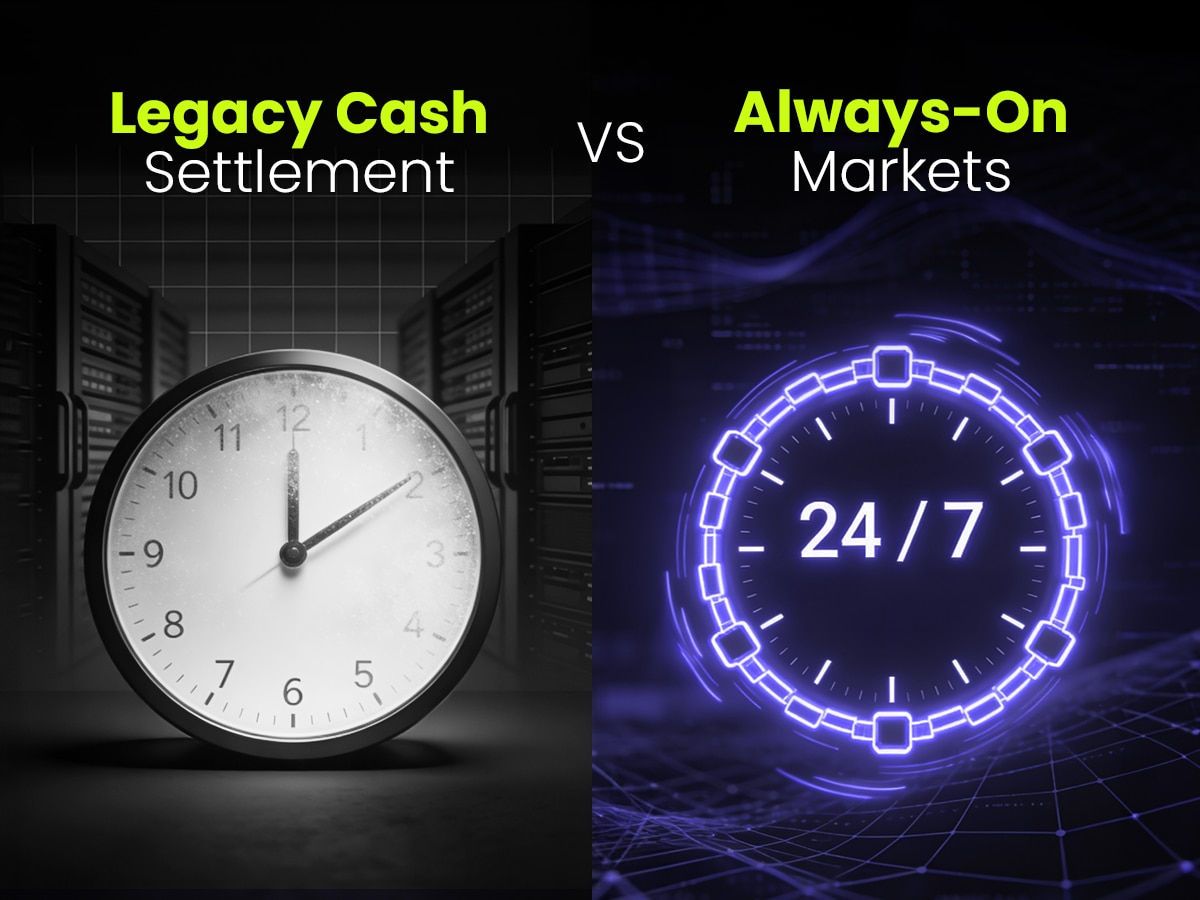
The only thing that shifts is the settlement layer.
How BNY reworked cash settlement
According to Bloomberg, this capability sits inside BNY Mellon’s longer-term “Project Crypto” roadmap, an effort to modernise clearing and settlement so regulated bank cash can move 24/7 instead of through fixed batch windows.
Why settlement speed matters at institutional scale:
What BNY changed: Not the deposit itself, but the way it can be used. The system runs on a private, permissioned blockchain finance, where tokenized balances act as digital book entries mirroring existing demand deposit claims, rather than newly issued assets.
Crucially, regulatory, accounting, and reporting records continue to sit on BNY’s core banking systems.
The limits of existing settlement rails
Global financial institutions post trillions of dollars in collateral daily across derivatives, securities lending, and repo markets. Even small delays in moving margin can translate into real funding costs and operational risk.
At the same time, stablecoins – despite growing past $130 billion in circulation globally – still sit awkwardly with many regulated institutions. They introduce issuer risk, governance questions, and compliance complexity.
Tokenized deposits change the equation:
BNY’s approach underlines the issue clearly: you can tokenize bonds, funds, or even carbon credits, but if cash still moves on 1970s plumbing, everything eventually slows down.
| Legacy Banking Design | Modern Market Demands |
| End-of-day reconciliation | Continuous, near-instant settlement |
| Sequential, batch-based processing | Parallel, always-on execution |
| Limited programmability | Rule-based, automated flows across systems |
| Manual intervention at cut-offs | Real-time visibility and control |
| Closed, siloed ledgers | Interoperable, globally connected rails |
A production-grade turn for tokenized deposits
BNY, the world’s largest custodian with nearly $58 trillion in assets, has been testing tokenized deposits since late 2025. That work has now moved into a live pilot for institutional clients.
This marks a shift from experimentation to production. The focus is settlement infrastructure for active institutional use.
The direction: Stablecoins serve open liquidity needs, while tokenized deposits are taking shape as the preferred rail for regulated, high-value institutional settlement.
That’s why permissioned designs matter. BNY’s approach builds identity, compliance, and control directly into the system, similar to how platforms like Kalp Studio design institutional rails. This design philosophy is increasingly shared across institutional blockchain infrastructure providers.
As Mrityunjay Prajapati, CTO, Kalp Studio, puts it:
“Institutions don’t want speed at the cost of control. They want settlement logic, identity, and compliance to be native to the infrastructure.”
The evolution of bank money on-chain
What BNY Mellon is demonstrating is not a replacement of the banking system, but an upgrade to its settlement logic. As financial markets move toward real-time execution, bank money must move with the same speed and control. Tokenized deposits are emerging as the bridge—bringing regulated cash onto always-on infrastructure without compromising trust, compliance, or stability.
