 English


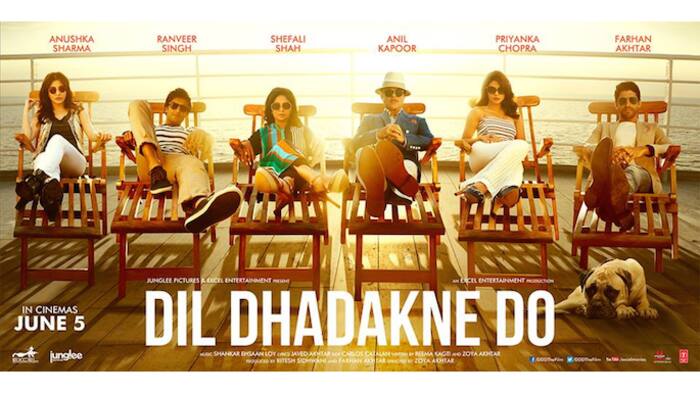
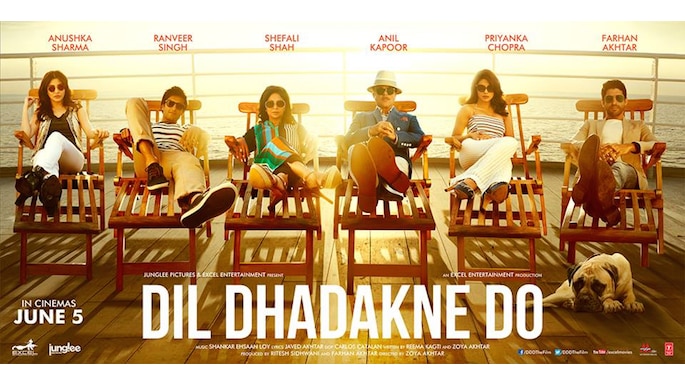
When the only member of a household who can give us the story straight is the dog, you know something is amiss.
But that’s only the first of many symptoms that diagnose the Mehras as a dysfunctional—albeit exceedingly wealthy—family in “Dil Dhadakne Do,” the latest and super-hyped summer offering from director Zoya Akhtar. Having seen success with her 2009 debut “Luck by Chance,” a satire on the fickle side of showbiz, and the 2012 “Zindagi Na Milegi Dobara,” which received resounding applause with its premise of three bachelors’ self-discoveries on a road trip, Zoya has since been celebrated for capturing the contemporary spirit and struggles of her generation.
Sure, some may scoff at her showcasing the gilded troubles of those who live charmed lives, but it seems silly to outright reject a film purely for its focus on first world problems—and, in fact, much of “Dil Dhadakne Do” is a self-aware poke at the “poor little rich.” Plus, come on, few of us would turn down a holiday—or views—like the one Zoya invites us to partake in with “Dil Dhadakne Do.”
Kamal Mehra (Anil Kapoor) is a self-made billionaire Delhi-ite who spends more time with his state-of-the-art golf clubs and on suspicious “business” trips than with his wife Neelam (Shefali Shah), the quintessential well-coiffed lady-who-lunches, with friends that have done little with their lives unless you count making a career out of perfecting the arts of gossip and side-eyeing. For all their three decades together, the couple has long lost touch, their regular “lunch dates” a fabricated story so that friends won’t pick up on their growing rift. For the Mehras and their ilk, it’s all about new money, private planes, the latest Louis Vuitton. The only thing out-of-season about them is their values, which remain firmly embedded in conservative traditions, outdated expectations, and social reputation. They’ll bribe their noble yet somewhat aimless son Kabir (Ranveer Singh) into a forced engagement in order to save Kamal’s sinking company, for instance, while refusing to pay heed to their daughter Ayesha’s (Priyanka Chopra) desperation to escape her own unhappy marriage for fear of the continued stigmatization of divorce and how it will “look” to society.
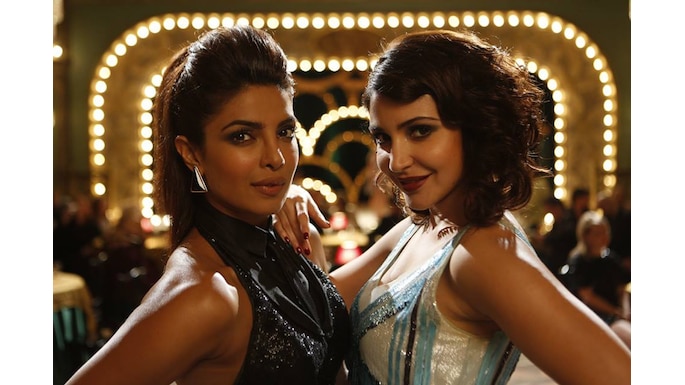
And yet, as part of their 30th anniversary celebration, they decide to treat an exclusive group of extended family and friends to a 10-day cruise through Turkey and Greece, embellished with promises of relaxation, revelry, and of course, open bars. But what is meant to be the holiday of the decade quickly turns out to be a luxurious yet inescapable trap of sorts, where grudges and secrets, lies and misunderstandings, suppressed old romances and forbidden new ones are caught in the extravagant vessel, simmering under the designer clothing and pegs of Johnnie Walker. Once they set sail, the glittering facade begins to gradually fade, revealing a family cracking at the seams.
Much of this, as aforementioned, is information we learn through family pooch Pluto, voiced, for some reason, by prolific actor Aamir Khan. Apart from this being disorienting in itself, Pluto’s narration is problematic precisely because it gives us way too much exposition without much action. It’s a classic case of telling and not showing, the inconceivable yet convenient tool of canine storytelling taking us far out of the story and making for a first half that is less about acting and more about explaining; a shame, when there are so many perfectly adept actors present who, when given the chance to do their thing, are a pleasure to watch.
I’ve always admired Zoya’s ability to keep things real despite setting her films in the worlds of a social stratum that few of us can claim to belong to. Whether it is her dialogue, the relationship dynamics, the humor or the consequences of her characters’ actions, the entertainment value of her films run parallel with a treatment that is accessible and reassuringly un-melodramatic. Here, the authenticity that makes a Zoya Akhtar movie so trustworthy ebbs and flows; there are indeed plenty of not just hilarious, but relatable moments—in particular, implications about a woman’s place in her parents’ and in-laws’ homes after marriage will strike chords everywhere; yet, much of the film is a struggle to achieve a satisfying balance between comedy and conflict.

Attempts to scratch below the surface hold real potential, such as a confrontation between Ayesha and her ex- boyfriend Sunny (Farhan Akhtar, in an extended cameo) after she’s been insulted by her controlling husband (Rahul Bose), or the promising start of conversation between she and her mother on navigating the hardships in marriage. But often, at such opportunities for deeper reflection, Zoya stops shy as if wary of disrupting the holiday mode. Like with any getaway, you wish to leave your troubles behind, and Zoya does this almost too well for the story’s own good at times, unintentionally trivializing the Mehras’ issues in her attempt to preserve a light n’ breezy atmosphere. On other occasions, she veers towards the other extreme, whether it’s Sunny’s awkward and misplaced speech on women’s rights or an overly heated family showdown teetering dangerously on the brink of going overboard.
Such tonal shortcomings are tempered by an exemplary leading cast who, despite referring to the shoot as an extended vacation during many a press junket, clearly did their homework of getting into the headspace of their respective characters. With pitch-perfect outbursts and hilariously on-point expressions, Anil Kapoor expertly pulls off the Punjabi patriarch. Priyanka Chopra gives a well-tuned vulnerability to her role as a professional powerhouse whose Forbes list prestige hasn’t translated into her home life, where she has no voice.

And I still can’t figure out how Ranveer Singh manages to charm his way through any scene despite my aversion to over-the-top acting. As Kabir, he is somewhat aimless, yet fiercely loyal and inexplicably endearing. While Farhan’s Sunny, who appears only halfway through the film as Ayesha’s old flame, is surprisingly unmemorable, Anushka Sharma shines in her brief role as a dancer who steals Kabir’s heart, the chemistry between her and Singh immediately palpable regardless of their abbreviated screen time together. But it is Shah as the jaded yet jilted wife Neelam, who ultimately lends the highest degree of realism, heartbreak, and depth to even the most ridiculous of scenes, and is especially grounding during a climax that finally does go off the deep end of believability. Her performance is a reminder of her overwhelming talent, which stole the show 14 years ago in “Monsoon Wedding,” and after this, has us hoping to see her in much, much more.
With its underlying moral of doing what one’s heart desires, even if it defies convention or socially constructed rules, “Dil Dhadakne Do” comes with noble intentions. But apart from cruising on the talent of its ensemble cast, there’s little here to keep the film, or its message, afloat.


For breaking news and live news updates, like us on Facebook or follow us on Twitter and Instagram. Read more on Latest India News on India.com.
