


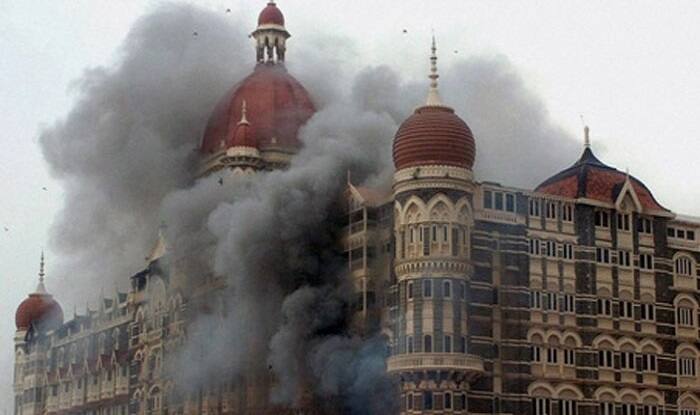
New Delhi, March 6: Mahmud Ali Durrani, the former Pakistan National Security Advisor (NSA) vindicated India’s stand on 26/11 terror attack, admitting the role of the Pakistan-based terror group in the cross-border strike. Speaking at the 19th Asian Security Conference, Durrani said, “26/11 Mumbai attack carried out by a terror group based in Pakistan is classic trans-border terrorist event.”
Mahmud Ali Durrani was Pakistan’s National Security Advisor when the terrorist attacks in Mumbai occurred on November 26, 2008, which led to the killing of 166 people including 18 security personnel and few foreigners. Ajmal Kasab was the lone terrorist caught alive by the security forces and he was hanged after a trial in November 2012.
Durrani’s statements have created controversy because despite ample evidence provided by New Delhi to Islamabad over the involvement of Lashkar-e-Taiba commanders in the Mumbai attacks, Pakistan has kept denying every allegations and evidence provided by India. Apart from evidence provided by India, American citizen David Headley has also testified that the plot of the attacks was known tp at least one Pakistani intelligence official and navy frogman. However, Pakistan has still maintained its stand over the issue.
2008
After the Mumbai attacks on November 26, 2008, India handed over two demarches to Pakistan. Out of the two demarches, one was submitted by the Indian High Commissioner Satyabrata Pal. Pranab Mukherjee, the then Indian Minister of External Affairs had summoned Shahid Malik, Pakistan’s High Commissioner on December 1, 2008, to lodge a formal protest over Pakistan’s failure to curb the terrorism from the Pakistani soil. Pranab Mukherjee further stated that it will await Pakistan’s response further adding that India has not ruled out the option of military strikes against the terrorist camps in Pakistan.
2009
After consistently denying India’s claims, Pakistan agreed to look into the matter on January 7, 2009. The Indian government also provided all the proofs and evidence related to the case with the Pakistan’s High Commission in New Delhi. Pakistan later dismissed all the claims made by India and stated that the dossier submitted are “not evidence” but it announced to have detained more than 100 Jamaat-Ud-Dawa members. Manmohan Singh, the then Prime Minister of the country said that Pakistan has not done enough to bring the perpetrators of the attacks to justice. Pakistan began the formal trial on October 3, 2009, but the Indian government claimed that the attacks were well planned and further accused that the attacks may have an official backing from ‘Pakistani agencies’ but the accusation was denied by Pakistan.
2012
Despite a formal trial began on October 3, 2009, the actual trial started on May 5, 2012. The Pakistani court later refused to take the findings of the Pakistani judicial commission as a part of the evidence and further stated that if a new agreement allows the panel to examine the witness, the prosecution may move an application for sending the panel to Mumbai.
The Indian government was upset over the court ruling and former Home Minister P Chidambaram had said on June 28, 2012, that Pakistani state actors were involved in the 2008 carnage.“When I say state actors, at the moment, I am not pointing a finger at any particular agency. But clearly there was state support or state actors’ support for the 26/11 massacre,” he had said.
2013
An eight-member commission consisting of prosecutors, defence lawyers and court officials were allowed to travel in India on March 15, 2013. After the report of the Pakistan judicial commission was rejected by the anti-terrorism court in Pakistan due to lack of evidence, the Pakistan judicial commission arrived in India on September 21, 2013, for the second time to carry out the investigation and cross-examine the witnesses.
2015
Tariq Khosa, a top police official who was made the Director General of Federal Investigation Agency weeks after the Mumbai attacks wrote an article in Dawn newspaper revealing the plot and its investigation which helped India’s claim that the terrorist activities being planned have been planned on Pakistani soil. Tariq Khosa stated that the entire Mumbai attack was planned and launched from his country and the entire terrorist operation was also directed from an OPS room in Karachi.
In the article, Tariq Khosa states,”First, Ajmal Kasab was a Pakistani national, whose place of residence and initial schooling as well as his joining a banned militant organisation was established by the investigators. Second, the Lashkar-e-Taiba (LeT) terrorists were imparted training near Thatta, Sindh, and launched by sea from there. The training camp was identified and secured by the investigators.”
2016
On June 30, 2016, Pakistan asked for more evidence from India over the Mumbai 26/ 11 attack to bring ‘logical end’ to the case. Foreign office spokesperson Nafees Zakariya had stated that “The Foreign Secretary had written a letter to authorities in India asking for more evidence for the Mumbai attacks” further adding that “Islamabad would bring the Mumbai attacks case to its logical end.”
Successive Pakistani governments have assured India that action will be taken against extremist elements behind the ghastly terror attack carried out on November 26, 2008. Despite discussions and dialogues between sets of Indian and Pakistani functionaries over the past 9 years, Islamabad is yet to crack down on the perpetrators of the terror attack.







For breaking news and live news updates, like us on Facebook or follow us on Twitter and Instagram. Read more on Latest India News on India.com.
