 English


[Photo Source: Screenshot via Netflix/Fuller House (Episode 11, ‘Partnerships in the Night’)]
Netflix gave its audience solid nostalgia when it brought back the famous family show “Full House” (1987-1995) as a sequel called “Fuller House,” which released on February 26.
All original cast members (except Michelle, played by twin sisters Mary-Kate and Ashley Olsen) returned for the show, the plot of which was relatively similar to the original. D.J. Tanner-Fuller needs help raising her three sons—Jackson, Max, and Tommy Jr.—so her younger musician sister, Stephanie Tanner, and wacky best friend, Kimmy Gibbler (with her own teenage daughter, Ramona) move in to help her.
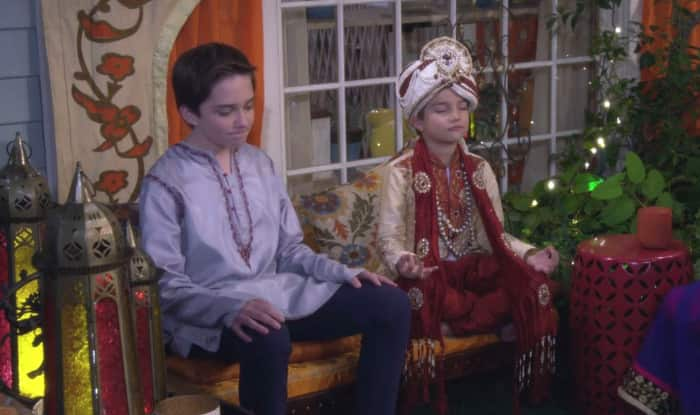
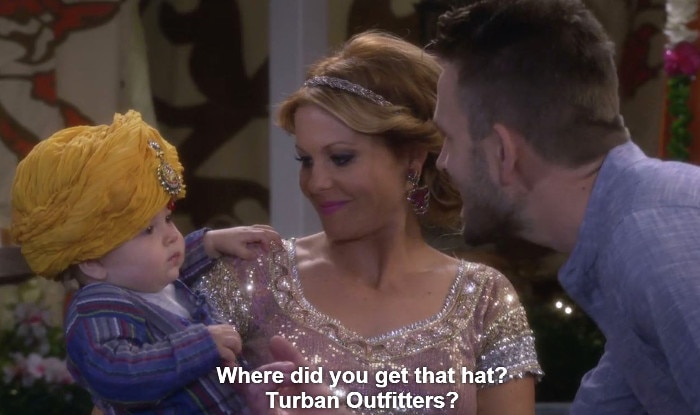
As someone who grew up watching “Full House” reruns in India, I couldn’t wait to be swept up in old memories of the Tanner household and take in the new gooey, sweet, and sometimes funny moments these beloved characters experienced in the present. Obviously, I binge-watched all 13 new episodes a day after the show released. The 80s show, while being family-friendly and bottled with cheesy messages, was never really one that focused on diversity. The only characters of color that had any importance over the original eight seasons were probably Michelle’s best friends Teddy (Tahj Mowry) and Denise (Jurnee Smollett). Let’s not even talk about South Asian diversity, because there wasn’t any. That’s why we were all in for a surprise while watching “Partnerships in the Night,” the 11th episode of “Fuller House.” In the episode, D.J.’s boss, Dr. Harmon, is retiring from the veterinary clinic they run because he is moving to an ashram in Mumbai—and giving up all materialistic pleasures. So, what do they do to honor that? Why, throw him a party, of course—and not just any party, but an Indian-themed party in their very own backyard. Is India, as a country and culture, appropriate as a theme for a party? No. But neither is an ‘Arabian Nights’ theme, or a ‘Spanish Fiesta.’ Honestly, the success of such themes depends on whether or not you make it cringe-worthy or if you’ve at least grasped the cultural context well. While “Fuller House” went the route of completely and wholly stereotypical for the episode, I don’t think the makers and actors were trying to ridicule the Indian culture. I thought I’d break down the obvious clichés, some could be seriously avoided while most just represented honoring the Indian culture, in their own oblivious-but-appreciative way. It’s more than I can say for how some Bollywood movies represent any foreigners, or even just Indians from different states!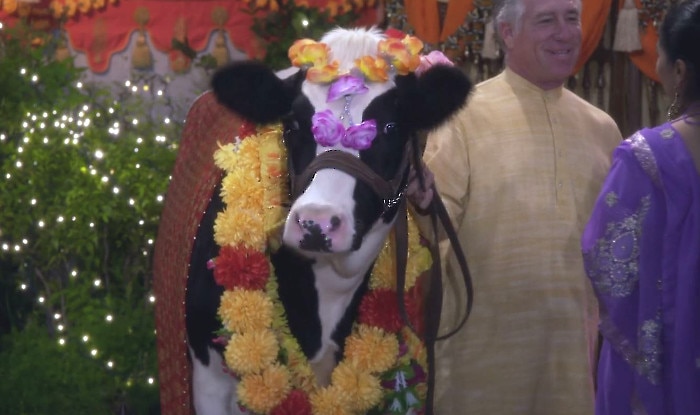 [Photo Source: Screenshot via Netflix/Fuller House (Episode 11, ‘Partnerships in the Night’)]
 [Photo Source: Screenshot via Netflix/Fuller House (Episode 11, ‘Partnerships in the Night’)]
 [Photo Source: Screenshot via Netflix/Fuller House (Episode 11, ‘Partnerships in the Night’)]
#FullerHouse The episode with the Indian party is one of my favorite..
P.s. How adorable is Max??
— Nouf Adas (@NoufAdas) February 29, 2016
Fuller House was great till this ‘Indian themed party’ episode came on#StopWhitePeople #CultureAppropriation #OD pic.twitter.com/GsF16gIpoW
— BonitaApplebum (@pysofly) March 1, 2016
Is the indian party on fuller house cultural appropriation or not im not sure
— kayla (@htmIbabe) March 1, 2016
The Indian party in Fuller House is nothing compared to a real Indian party. Like man, come on. If you want a party, go all out.
— Guru Krish (@krishnabpatel) March 1, 2016
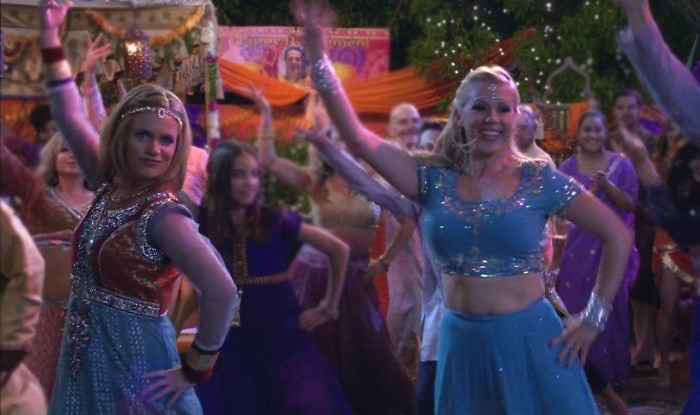
The dance number at the Indian party in #FullerHouse just made my night. I’m finna learn the whole thing.
— Josh Sutton ️ (@JoshJSutton) February 29, 2016
And of course there’s a bunch of white people dancing to “Indian” music at the party. #FullerHouse pic.twitter.com/40cfHwZG9I
— Asvatha (@fireflyclass) February 27, 2016
#FullerHouse promotes diversity since they added a little Spanish to the mix & the Indian themed retirement party. Lola being Asian & Harry.
— Deepika (@DDK_1990) February 28, 2016
Could they have done better? Oh yeah, like maybe show some actual Indians! However, they didn’t demean us or our culture—they showed it as best they could with the little knowledge they have. By objecting to the flashy lights, colors, clothes, and music, we are trying to say that’s not us—but that is not entirely true. It is a part of who we are. Instead of being hyper-sensitive, we could look at the aesthetic way in which they approached the subject.Season 1 complete. When do we get season 2? @fullerhouse Loved the Indian party & @JodieSweetin‘s dance moves! @candacecbure @andreabarber
— Aishwarya Arjunan (@aishuarjun) February 28, 2016


For breaking news and live news updates, like us on Facebook or follow us on Twitter and Instagram. Read more on Latest India News on India.com.
