


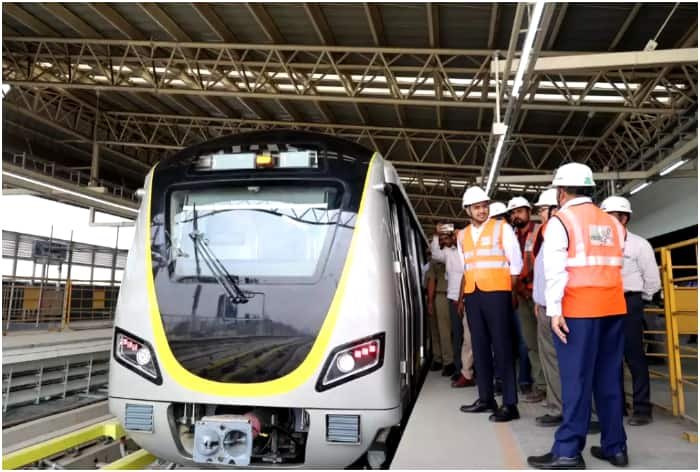
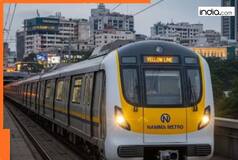
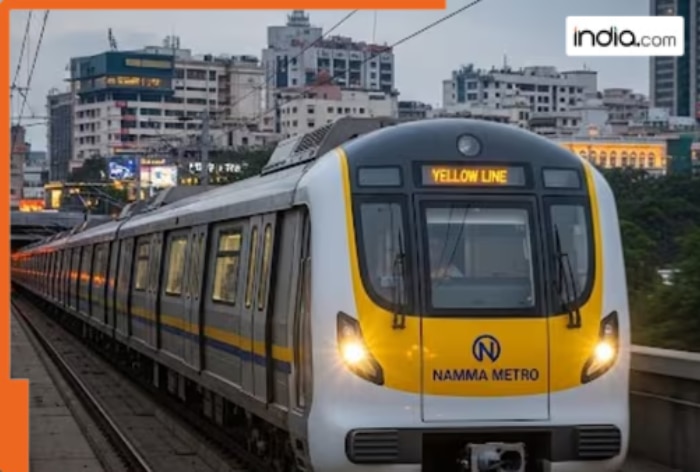
Good news for Bengalureans: Namma Metro’s first driverless train will be in service soon and will be deployed on the Yellow Line as it undergoes testing for the integration of the signaling system. Notably, on February 20, the first set of six coaches was received by the Bangalore Metro Rail Corporation Ltd. (BMRCL) at the Hebbagodi metro depot from China. These coaches are currently undergoing numerous tests.
Officials, who are part of the project stated that the signalling test is part of the mainline testing of the driverless trains.
“Being a new rolling stock, multiple tests need to be conducted. Currently, coaches are undergoing static and electrical circuit testing. Soon, they will be moved to mainline testing, that is integration of the signalling system,” The Hindu quoted a senior BMRCL official said
The train is set for a total of 37 assessments, with the upcoming evaluations targeting the merging of the system with signalling, telecommunications, and power supply. There are safety checks on the cards, like the oscillation exercises conducted by the Research Designs and Standards Organisation (RDSO) and a review by the Commissioner of Metro Rail Safety (CMRS). Pending suggestions from the RDSO and CMRS, we need approval from the Railway Board before we can have the train up and running for earning revenue, as per official reports.
The unmanned trains pride themselves on their state-of-the-art technology, which includes operations that require no staff, enhanced observation from the Operations Control Centre, a system for monitoring the tracks, hot axle detection system, as well as a check for obstacles and derailment. Moreover, the train cars come with electric signs over the doors to showcase routes, advertisements, announcements, and other relevant data.
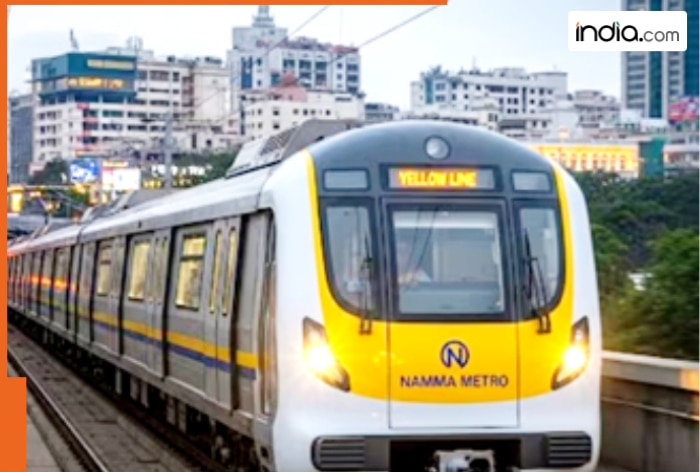
By the end of this year, the Yellow Line, reaching for about 18.82 kilometers, is prepared to be fully functional. With an elevation throughout its course, this metro journey consists of 16 stations and creates a connection from R.V. Road Station to Bommasandra. Important points of intersection are at the R.V. Road Station with the Green Line and at Jayadeva Hospital Station with the Pink Line. Interestly, there’s a combined metro and road flyover, a stretch of 3.13 kilometers from Ragi Gudda to Central Silk Board, constructed to alleviate the heavy traffic at the Central Silk Board junction. This line features five ramps and loops, extending the double-decked flyover towards K.R. Puram and Hosur Road, both are nearing completion currently.
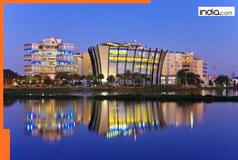
The main intent behind the Yellow Line is to bolster the connection to key regions, hosting major IT and biotech companies, such as Infosys and Biocon, in addition to offering convenience to South Bengaluru.




For breaking news and live news updates, like us on Facebook or follow us on Twitter and Instagram. Read more on Latest India News on India.com.

