


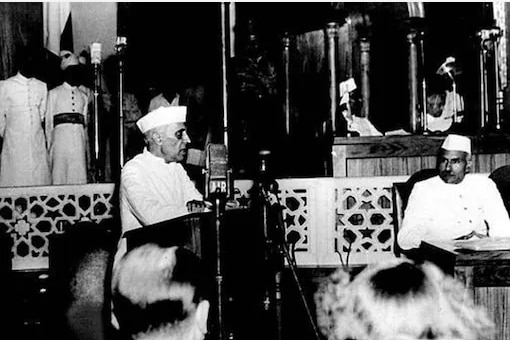


New Delhi: India became independent from the British rule on August 15, 1947 with hopes of making the country self reliant in economic and political terms. The joy of independence was bitter-sweet as the shadows of gloom hovered in the social and economic sphere of the country. As a result of steady deindustrialization by Britain, India faced abject poverty, stark illiteracy and found itself in the middle of a socio-economic crisis. As former prime minister Manmohan Singh put it: “The brightest jewel in the British Crown” was the poorest country in the world in terms of per capita income at the beginning of the 20th century.
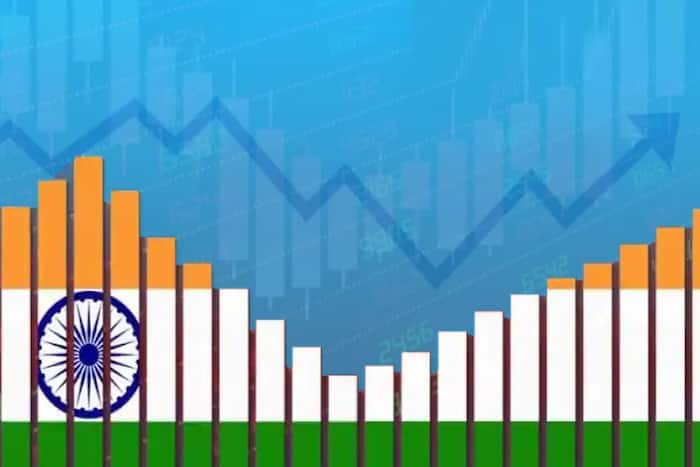
Since then, India has seen biggest ups and downs in its economy: from agrarian crisis to privatisation; from demonetisation to the introduction of Goods and Service Tax (GST), from stock markets touching new highs to digitisation.
As India went through its worst droughts in the 1960s, the nation had to depend on western countries for food and grain supplies. But the crisis led to focus on self sufficiency of food grains and hence, the Green Revolution came into being.
Apart from that, the period holds significance as, during this phase, Mrs. Indira Gandhi had nationalised 14 biggest commercial banks. The main aim of the move was to accelerate bank lending to agriculture at a time when big businesses cornered large chunks of the credit flow.
The journey of the Indian economy is incomplete without this chapter. With the devaluation of the currency, rising fiscal deficit of the government (from 9% of GDP in 1980-81 to 10.4% in 1985-86 and 12.7% in 1990-91), India’s external debt nearly doubled from some $35 billion at the end of 1984-85 to $69 billion by the end of 1990-91.
The country’s foreign exchange reserves had dried up to the point that India could barely finance three weeks worth of imports. The situation was so grim that the Indian government had to mortgage some 20 tonnes of gold for $240 million, just to keep the economy afloat.
On the political front, the Chandra Shekhar government gave way to another Congress government, as the party made a comeback after two years. Enter PV Narsimha Rao as prime minister and Manmohan Singh as finance minister.
Within weeks of assuming power, Rao and Singh announced a series of policies that changed the face of Indian economy– liberalisation, privatisation and globalisation.
These reforms helped the country get freedom from the tough bureaucratic system and opened the doors for more opportunities and foreign financial inflows. Moreover, it led to the boom in stock markets.
The “Great Recession” , an epic financial and economic collapse that brought the whole of Wall Street to its knees was led by the largest bankruptcy in U.S. history– the collapse of Lehman Brothers. While the other countries were facing the worst, economic growth in India during FY2008-09 stood at 6.7%. Reportedly, India was less impacted because the exports accounted for just 15% of the GDP.
But, what came in as a surprise was the stimulus package announced by the Manmohan Singh administration. In December 2008, the government decided to seek approval for an additional plan expenditure of Rs 200 billion. “The government also infused about Rs 3 trillion into the system for public spending through a range of measures such as lowering tax and reduction of key rates by the Reserve Bank of India”, stated an Economic Times report.
Moreover, this package did not go well for the government. “My government was punished in the 2014 elections after we spent more money in 2009 as part of a stimulus package. Due to this, we had to violate fiscal consolidation norms. The inflation went up to 14% and the rupee lost its value. Finally, people rejected our government”, P Chidambaram, the finance minister at the time, was quoted as saying.
Apart from the economy, the Sensex tumbled from more than 20,000 points in Dec 2007 to a little over 9,000 (lowest) in mid-early 2009, before bouncing back to 17,000 in the same year.
After eight years, the word “demonetisation” was introduced in the annals of India’s economic history. Prime Minister Narendra Modi on November 8 of that year declared that Rs 500 and Rs 1,000 notes would not be legal tender. The announcement shook the country, almost everyone from a small vendor to a high-profile businessman was affected. Sensex crashed nearly 1,689 points and Nifty plunged by over 541 points due to the government’s move to withdraw notes of higher denominations.
Just months after demonetisation, the Rajya Sabha (Upper House) passed a crucial bill on Goods and Services Tax (GST). However, at that time, the markets didn’t react much and remained mostly flat on the upper side.
But, after nearly three years, the country witnessed another jolt: the coronavirus pandemic. According to a report by Azim Premji University, the first wave of COVID-19 pandemic pushed 23 crore people below the poverty line (below the national minimum wage threshold of Rs. 375 per day as recommended by the Anoop Satpathy Committee). The report said there has been a rise of 15% in poverty in rural India and a rise of 20% in urban India during the last one pandemic year.
However, after the second wave, it is still unclear how deep the impact of the pandemic would be on the country’s economy. Despite that, the Sensex touched an all-time high of 55,000 and Nifty at 16,529, giving hopes for better and improved days ahead.



For breaking news and live news updates, like us on Facebook or follow us on Twitter and Instagram. Read more on Latest Business News on India.com.
