


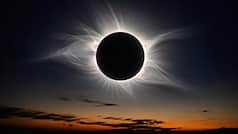


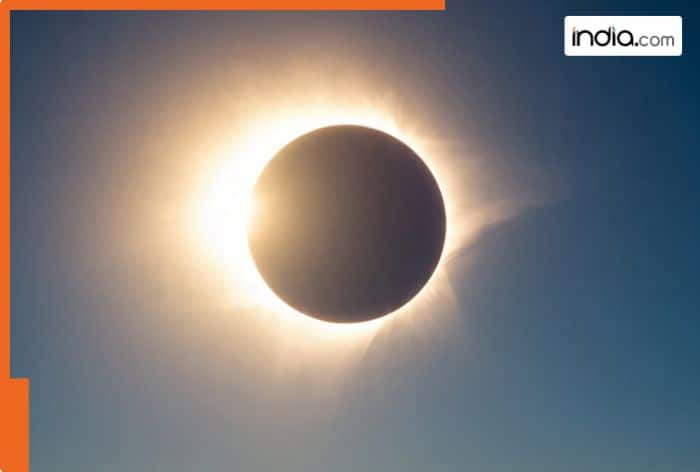
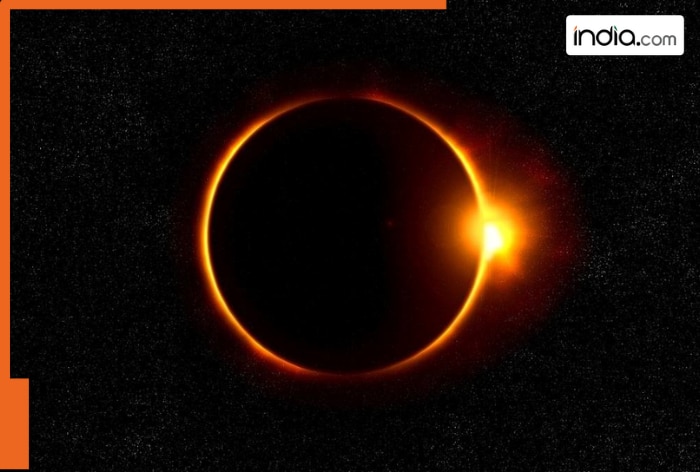
Solar Eclipse Date and Time Live Updates: Days after witnessing a Blood Moon, or total lunar eclipse, skygazers across the world are in for a treat today, as the last solar eclipse of 2025 will grace the skies on Sunday night. It is important to note that the last solar eclipse of 2025, scheduled for September 21, will be partial and will not be visible from India. Those living in parts of Antarctica, Australia, the Pacific Ocean, and the Atlantic Ocean may be able to witness the celestial event. In a partial eclipse, Earth’s shadow appears very dark on the side of the Moon facing Earth. A solar eclipse occurs when the Moon passes between the Earth and the Sun, partially or completely blocking sunlight from reaching Earth. Depending on the alignment, eclipses can be total, partial, or annular. Solar eclipses take place at least twice a year somewhere on Earth. But catching one from the same spot is rare, sometimes only once in centurie
Solar eclipses take place at least twice a year somewhere on Earth. But catching one from the same spot is rare, sometimes only once in centurie
A partial solar eclipse is taking place, with the Moon blocking a significant portion of the Sun. The rare event will be visible in select areas of the South Pacific, including parts of New Zealand and eastern Australia.
At 3:41 p.m. EDT (1941 GMT), the eclipse reaches its peak over the Pacific Ocean, where over 70% of the Sun will be covered in some regions.
The final views of the eclipse will occur around 5:53 p.m. EDT from the Antarctic Peninsula, depending on local weather conditions.
At 3:41 p.m. EDT (1941 GMT), the eclipse reaches its peak over the Pacific Ocean, where over 70 percent of the Sun will be covered in some regions.
The final views of the eclipse will occur around 5:53 p.m. EDT from the Antarctic Peninsula, depending on local weather conditions.
This partial solar eclipse will mostly favour the Southern Hemisphere, with clear views across Australia, New Zealand, Antarctica, and several Pacific islands.
Skywatchers in places like Sydney, Auckland, Wellington, Suva, Papeete, Pago Pago and even Antarctic stations like McMurdo will witness the eclipse in its glory.
Astronomers note that after this eclipse, the Moon may look slightly darker than usual due to shifting light dynamics, a softer, dusky glow across its surface.
Solar eclipses take place at least twice a year somewhere on Earth.





For breaking news and live news updates, like us on Facebook or follow us on Twitter and Instagram. Read more on Latest India News on India.com.

