





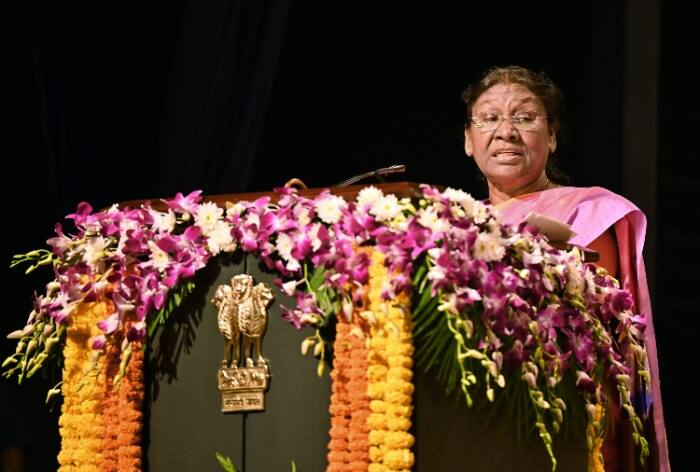
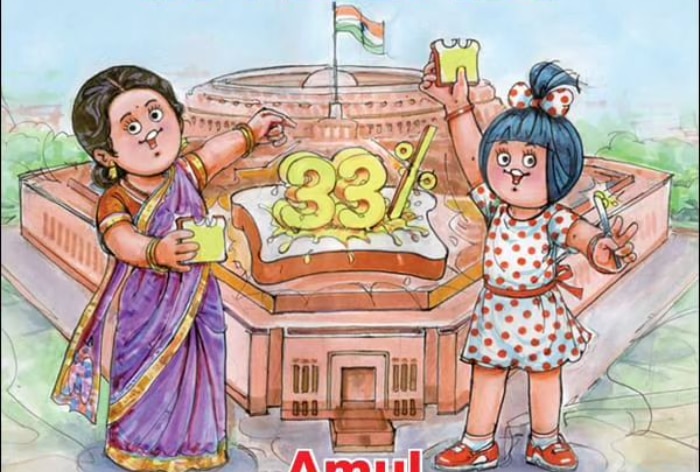
New Delhi: The Womens’ Reservation Bill has now become a law after President Droupadi Murmu gave her assent to the landmark legislation which seeks to provide 33 per cent reservation to women in the Lok Sabha and state assemblies.
According to a law ministry notification issued on Friday, President Murmu gave her assent on Thursday.
Now, it will be officially known as the Constitution (106th Amendment) Act.
According to its provision, “It shall come into force on such date as the central government may, by notification in the Official Gazette, appoint.”
In a historic moment, the ‘Nari Shakti Vandan Adhniyam’, popularly known as the Women’s Reservation Bill, was unanimously passed by the Rajya Sabha last week. The landmark bill, which provides 33 per cent reservation for women in the Lok Sabha as well as the state legislative assemblies, became the first bill to be passed in the new Parliament building.
On September 20, the Bill was passed following division with 454 members voting in favour of the legislation and two against it on the motion seeking its passage. The amendments moved by the Opposition members were negatived and separate clauses of the draft legislation were also voted on.
On September 21, Nari Shakti Vandan Adhiniyam was ‘unanimously’ passed in Rajya Sabha which marks the PM’s birthday according to the Hindu calendar.
Women members from both Houses of Parliament, including PT Usha, and Union Ministers Meenakashi Lekhi and Smriti Irani, were all smiles as they presented a bouquet to Prime Minister Narendra Modi following the historic passage of the Bill in Parliament.
The Rajya Sabha had earlier passed the Women’s Reservation Bill in 2010 during the Congress-led UPA government but it was not taken up in the Lok Sabha and subsequently lapsed in the lower House of Parliament.
After the Bill cleared the legislative hurdles in both Houses last week, Prime Minister Narendra Modi said that the Nari Shakti Vandan Adhiniyam in Parliament will usher in an era of stronger representation and empowerment for women in the country.
“A defining moment in our nation’s democratic journey! Congratulations to 140 crore Indians. I thank all the Rajya Sabha MPs who voted for the Nari Shakti Vandan Adhiniyam. Such unanimous support is indeed gladdening,” the Prime Minister said in a post on X.
“With the passage of the Nari Shakti Vandan Adhiniyam in Parliament, we usher in an era of stronger representation and empowerment for the women of India. This is not merely a legislation; it is a tribute to the countless women who have made our nation. India has been enriched by their resilience and contributions. As we celebrate today, we are reminded of the strength, courage, and indomitable spirit of all the women of our nation. This historic step is a commitment to ensuring their voices are heard even more effectively,” PM Modi added.
Union Minister Meenakashi Lekhi lauded PM Modi for the passage of the Bill saying that it will go down in history for empowering women.
While the Opposition leaders welcomed the bill, some flagged concerns over the non-inclusion of an OBC sub-quota in the draft legislation.
Bharat Rashtra Samithi (BRS) MLC K Kavitha, one of the key advocates for legislation providing a fairer representation of women in law-making bodies, called the passage of the quota Bill in Parliament a major step in ensuring stronger and more significant participation of women in the country’s political process.
However, she added, “There are a couple of omissions that catch one’s eye. Non-provision of a sub-quota for OBC women is painful. They should have added a sub-quota in the Bill as it would ensured a similar representation of women from backward classes in the country’s legislative process.”
(With inputs from agencies)








For breaking news and live news updates, like us on Facebook or follow us on Twitter and Instagram. Read more on Latest India News on India.com.
