




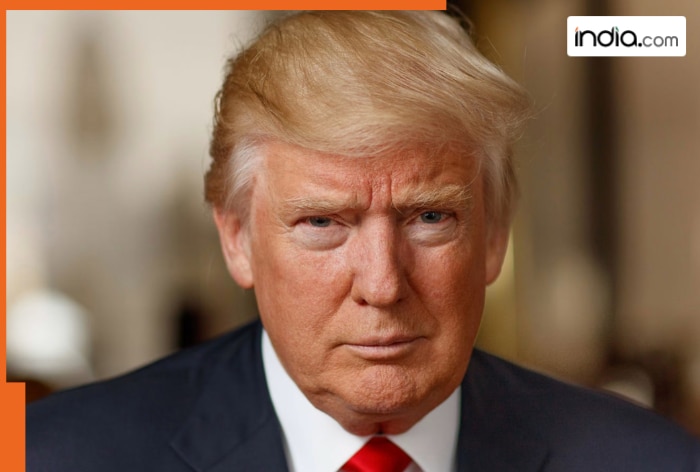
New Delhi: US President Donald Trump has always been known for his tough and sudden decisions. Especially when it comes to imposing tariffs on other countries, his approach has always been extremely aggressive. However, a recent decision by the US Supreme Court has blunted the edge of this most powerful and ‘dangerous’ weapon of his. Now, Trump will no longer be able to intimidate any country economically by imposing heavy tariffs overnight. The country’s highest court has put a stop to the arbitrary powers granted under the International Emergency Economic Powers Act (IEEPA). Trump still has the most potent tool of imposing tariffs, but now his path will be through legal complications and lengthy paperwork. Let’s understand Trump’s new trade strategy after this major change and its impact on the world.
Trump has always used the IEEPA as an infallible weapon. Under this, he could impose heavy taxes ranging from 10 to 50 per cent on any country without any lengthy process. The motive was not only economic, but often purely political. Whether it was to threaten European countries over the Greenland issue, to pressure the Brazilian government in support of former President Jair Bolsonaro, or to punish Canada for importing electric vehicles from China, Trump used this law everywhere.
The Supreme Court’s decision has largely closed this avenue of “political blackmail.” Michael Froman, president of the Council on Foreign Relations, has clarified that the US president will no longer be able to use tariffs for arbitrary retaliation or diplomatic intimidation.
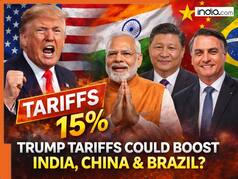
Following the court’s setback, the Trump administration immediately began working on “Plan B.” As an immediate relief, he has invoked Section 122 of the 1974 Trade Act. Under this, Trump signed an executive order imposing a 10 percent global duty on imports from around the world. This rule allows the president to impose a maximum tariff of 15 percent for 150 days without any lengthy investigation.
US Treasury Secretary Scott Bessant says that despite the new rules, tariff revenues will remain the same in 2026, with the implementation process becoming more complex. However, this 150-day rule serves only as a bridgehead, maintaining pressure on trading partners until the government finds a definitive and legally sound solution.
Trump’s new trade strategy now centers on two laws: Section 232 and Section 301. Section 232 of the Trade Expansion Act of 1962 allows for taxation of specific sectors in the name of national security. Under this, import duties are being imposed on cars, car parts, heavy trucks, copper, and wood products (such as furniture). However, its biggest drawback is that this rule applies globally, preventing Trump from targeting any single country.
In this context, Section 301 has emerged as Trump’s new weapon. Under this rule, the President can punish a specific country for its “unfair trade practices.” Under this law, Trump imposed heavy tariffs on China during his first term, which continued under the Biden administration. US Trade Representative (USTR) Jamison Greer has clarified that his team is launching new investigations against several major trading partners worldwide. These investigations will cover serious issues such as pharmaceutical companies’ drug prices, overproduction, forced labor, discrimination against American tech companies, and marine pollution. Investigations are already underway against China and Brazil, and Vietnam and Canada may soon be included.


For breaking news and live news updates, like us on Facebook or follow us on Twitter and Instagram. Read more on Latest World News on India.com.
