





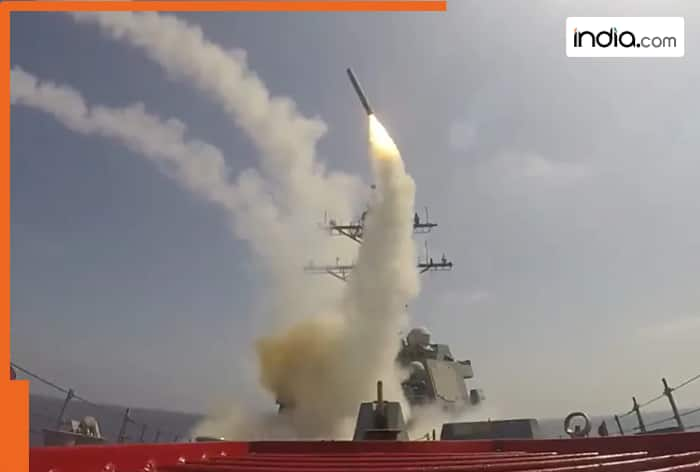
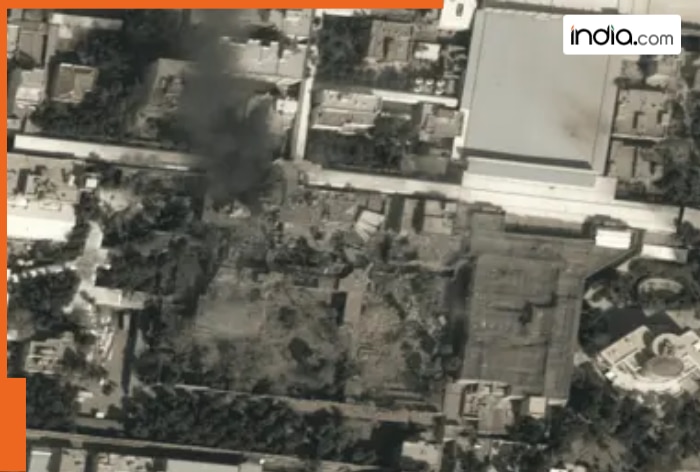
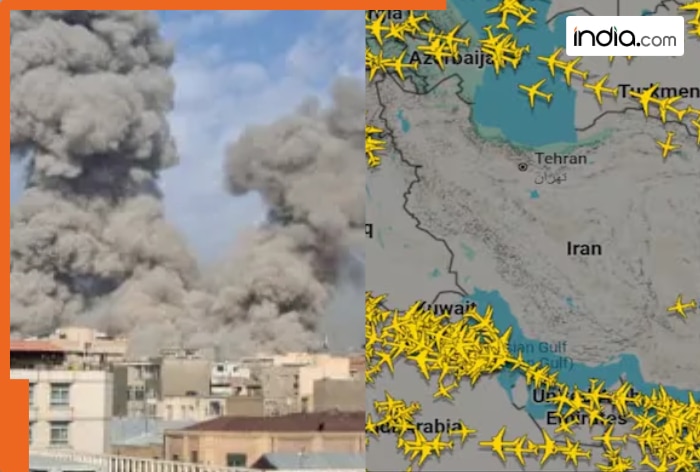
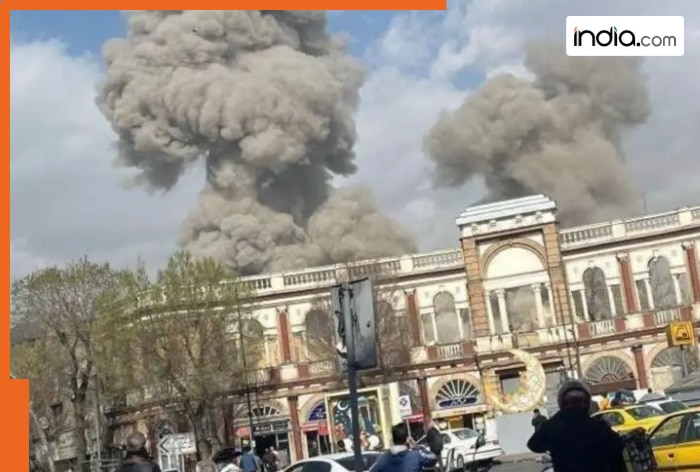
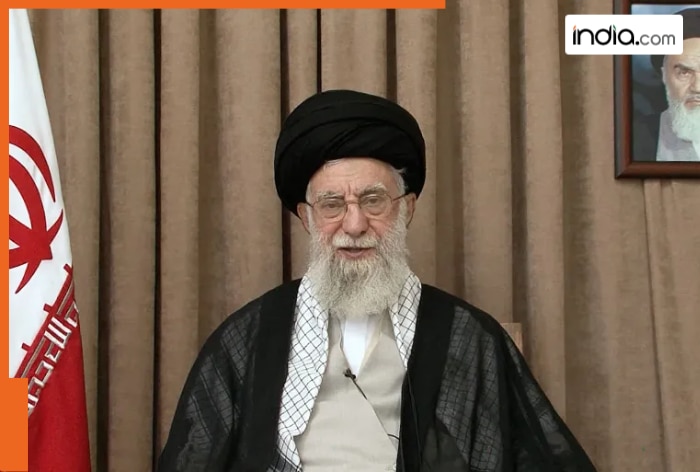
US-Israel Attacked Iran: Israel on Saturday informed that its Air Force, along with US forces, carried out airstrikes on different parts of Iran, including its capital city, Tehran. The strikes continued till the night and escalated on Sunday, hitting more than 30 targets. US President Donald Trump on Sunday morning (local time) announced that the Middle Eastern country’s supreme leader, Ali Khamenei, was killed in the airstrikes. The mission, named ‘Operation Epic Fury’ by Washington and ‘Lion’s Roar’ by Israel also killed several Iranian leaders and top military personnel. In response, Iran carried out retaliatory attacks targeting Tel Aviv and Washington’s military bases across the Middle East region, including in Bahrain, Kuwait, UAE, Qatar, Saudi Arabia and Jordan. Let’s check which weapons were used by the US and Israel against Iran and how Tehran retaliated.
Tomahawk Missile: It is a long-range, precision-guided cruise missile which is launched from an aircraft carrier for deep-strike missions. The missile is capable of hitting targets up to 1,600 km. The missile is specially design to bypass heavily defended airspace to destroy its target.
The US Central Command also used its deadly F/A-18 and F-35 fighter jets to destroy heavily guarded structures. Talking about fighter jets, F-35 is a highly advanced fifth-generation fighter jet which is known for its stealth technology. It is capable of evading radar while carrying precision-guided munitions. Another fighter jet was F-35, which is capable of carrying a wide range of missiles, including those capable of destroying radar installations.
The bomb is specially designed to penetrate deep below the surface before exploding. Bunker Buster Bombs, date back to World War II, but are still used because of their effectiveness during crucial operations.
It is a short-range ballistic missile which is derived from the Scud-B. The deadly missile has a maximum range of 300km. Its range gives the missile a capability of striking several urban areas near Iran’s borders. Shadab is a liquid-fueled missile which is capable of carrying a nuclear and conventional high-explosive warhead. It can carry up to 1000 kg of warheads.
Qiam-1 is a liquid fueled missiles and falls under the short-range ballistic missile (SRBM) category. Developed by Iran, the missile is an variant of the Shahab-2 SRBM. It does not have external tail fins, and has a separating warhead.
The Middle East country has developed several variants to the original Shahab-3 missile. The upgraded versions of this missile have a range of 1,500 to 1,800 km.
The Emad is a liquid-fueled missile which falls under the medium-range ballistic missile (MRBM) category. Introduced in 2015, Emad is specially designed with a manoeuvrable re-entry vehicle (MARV) for enhanced precision. It uses guiding fins in the nose cone for mid-air movements.
It is a medium-range ballistic missile which was derived from the North Korean Musudan (BM-25) missile. The first test fired in January 2017, the missile has a reported range of 2,000 km.
The medium-range ballistic missile was developed by Iran. It has a similar size, weight and range to Shahab-3 variants. It is capable of delivering a payload of around 700 kg and can hit targets up to 2,000 km.
It is an infrared-homing surface-to-air missile (SAM) which falls under the short-range missile category. It is loaded with a three-mode seeker (infrared, photo-contrast, and jam-resistant) for ‘fire-and-forget’ technology. The missile can easily target low-altitude aircraft, helicopters and UAVs.





For breaking news and live news updates, like us on Facebook or follow us on Twitter and Instagram. Read more on Latest World News on India.com.

