The Indian National Congress, byname Congress Party is one of the prominent political party of India. Founded in 1885 under the guidance of British civil servant Allan Octavian Hume, the Congress is the country’s oldest political party. The party operates on the ideology of Gandhian Socialism and Social Democracy and it positions itself centre –left contrast to the right wing nationalist BJP. The Congress party has subsequently formed most of the Governments in India and also has a strong presence in many of the state governments. The Indian National Congress was formed with the aim to obtain the greater share of Indians in the British Government. Headed by A.O. Hume, the Indian National Congress was formed with the members of the Theosophical Society namely Dadabhai Naoroji, Surendranath Banerjee, M.G. Ranade, Womesh Chandra Bonnerjee, Dinshaw Wacha, Monomohun Ghose and William Chandra. The Indian National Congress was the largest vehicle in the pre–independence period and it gained its support in the late nineteenth and early twentieth centuries. The congress became a major participant with over 15 million members and over 70 million participants against the British colonial rule in India. The congress also became the sole representative of the people of the country and it represented social reform causes and human progress. The Congress had many important political personalities which included Bal Gangadhar Tilak, Lala Lajpat Rai, Gopal Krishna Gokhale, Mohammed Ali Jinha and Bipin Chandra Pal. Dadabhai Naoroji was elected as the party president in 1886 and he was the first Indian Member of Parliament to be included in the British House of Commons. Surendranath Banerjee and Sir Henry Cotton transformed Congress into a mass movement during the Partition of Bengal which resulted into the Swadeshi movement.
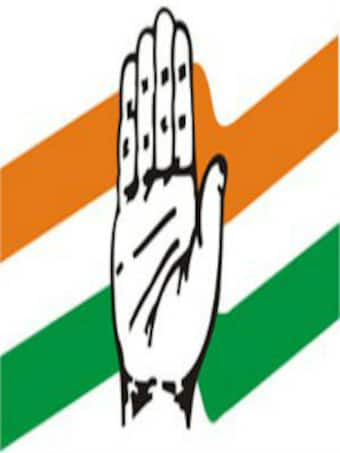
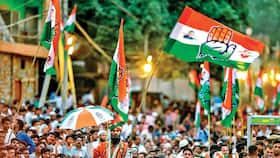
In the 1920’s and 30’s Mohandas Gandhi led the Congress party and the party began advocating the nonviolent non-cooperation. With Mahatma Gandhi at the centre stage of freedom struggle, many prominent members joined the freedom struggle. Jawaharlal Nehru, Jayprakash Narayan, Sardar Vallabhbhai Patel, Rajendra Prasad, Maulana Abul Kalam Azad, Jivatram Kripalani and others supported Mahatma Gandhi’s policy of Satyagraha and non violence. Through the years, the Congress became very popular and it started to identify itself with bug business houses like the Tata’s and Birla’s. In 1930 Mahatma Gandhi led the Salt March which advocated avoiding the taxes as a protest against British rule. Another wing in the party which believed in working with the existing system contested general elections in 1923 and 1937 as the Swaraj Party with a good success in the latter year winning 7 out of 11 provinces. In the final years of the independence, the Congress became the most important part of the freedom under the spiritual guidance of Mahatma Gandhi. With independence in 1947 and the assassination of Mahatma Gandhi, Pandit Jawaharlal Nehru became the sole leader of the Indian National Congress. The party fought its first general elections in 1952, the first general election after independence and came to power in the national parliament and most of the state legislature. From 1951 until Nehru’s death in 1964, he was the head of the party and made the party victorious in three general elections of 1951-52, 1957 and 1962. After Nehru’s death K Karmaraj became the party’s president. K Karmaraj was also known to be the ‘kingmaker’ and responsible for bringing Lal Bahadur Shastri to power in 1964. Shastri also had a similar popularity as that of Nehru. Shastri became the national hero after the victory in the India Pakistan war in 1965 and his slogan of ‘Jai Jawan Jai Kisan’ was very popular during the war. After Shastri’s death, Nehru’s daughter Indira Gandhi became his political successor. Indira Gandhi also held the position of Minister of Information and Broadcasting during Shastri’s tenure as the Prime Minister. The party was continuously in power until 1977 and the Congress tasted its first electoral defeat in 1977 when it was defeated by the Janata party Coalition. The reason for the party’s defeat is said to be the implement of the emergency from 1975-1977. It returned to power in 1980 and continued to be in power until 1989 when it was defeated again. In 1991 the party came into power again by forming a coalition and again in power in 2004 and 2009 when the party headed the United Progressive Alliance coalition. During this period the congress remained centre left whereas its socialist policies started shifting from socialist to neoliberal economic policies. The party’s current policy is different from the symbol formed by Congress in 1885. In 1885 the party had the symbol of two bullock with a plough. The current symbol of the party as approved by the Election Commission of India is the ‘right hand’ with its palm side facing front and it is seen in the centre of the Indian flag which forms its background. The fingers of the hands are pressed together and this symbol was selected by the Indira Gandhi led Congress after her split from the old faction and creation of the new Congress. The hand symbolizes strength, energy and unity.
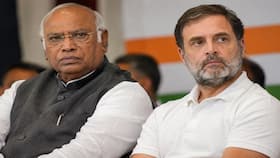
The present president of the Congress party is Indira Gandhi’s daughter in law Sonia Gandhi, the wife of Rajiv Gandhi. Their son Rahul Gandhi is the current vice president of the party and the Nehru–Gandhi legacy still exists in the top leadership of the party. 2009 was the last time when the party came into power and Manmohan Singh was chosen again as the Prime Minister of India. The Congress faced a huge defeat in the 2014 elections winning only 44 seats out of the 543 Lok Sabha seats whereas the BJP registered a landslide victory accounting 282 seats on its own. The Indian National Congress has a number of organizations under its banner. The student’s wing of the party is called as the National Students Union of India (NSUI) which has a vibrant presence in student politics across the country. The women wing is called All India Mahila Congress and its labour wing, one of the largest trade unions in the country is called as Indian National Trade Union Congress. Its youth wing is called as Indian Youth Congress. The UPA-1 (2004-2009) and UPA-2 (2009-2014) governments have initiated some of the important social policies which include Mahatma Gandhi National Rural Employment Guarantee (MGNAREGA) and National Rural Health Mission (NHM). The historic Right To Information Act (RTI) was passed in 2005 and another significant piece of legislation was passed in February 2013 was the Sexual Harassment of Women at Workplce (Prevention, Prohibition and Redressal act).