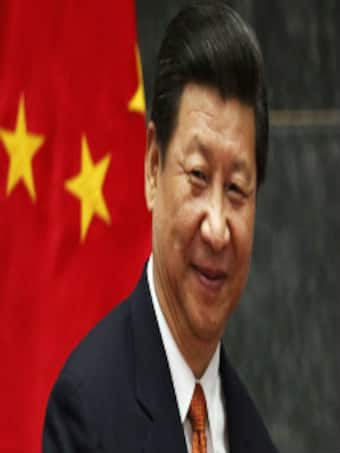
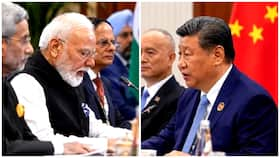
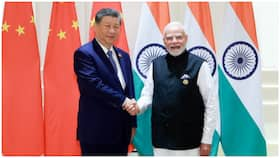
Xi Jinping is a Chinese politician and the current President of the People's Republic of China. He currently also serves as the General Secretary of the Communist Party of China and Chairman of the Central Military Commission. He is also an ex-officio member of China's top decision-making body Politburo Standing Committee. Before becoming the president, Xi served as the Vice President from 2008-2013 and Vice Chairman of Central Military Commission from 2010-2012. He has served as the Governor of Fujian from 1992 to 2001 and then the Governor of Zhejiang from 2002-207 and was also the Secretary of the party for a brief period in 2007. His goals after being elected as the President in 2013 include ending corruption in the country and improvement of the environment.
Born on 15th June 1953, Xi Jinping was born to Xi Zhongxun and Qi Xin. His father is considered among the first generation of Chinese Leadership and after the foundation of the Communist state in 1949, he held series of posts that included the Propaganda Chief, Vice-Premier and Vice Chairman of the National People's Congress. When Xi was ten years old, his father was purged from the party and was sent to work in a factory based in Luoyang, Henan. Xi was unable to complete his secondary education and sent to work in Yanchuan County Shaanxi. His father was jailed in 1968 during the Cultural Revolution and Xi was sent to the rural village of Liangjiahe and he had to work and live among the locals. While staying there he lived in a typical cave-like dwelling and fetched water from a well. Later, he went to Tsinghua University in Beijing and studied chemical engineering. He tried to join the Communist Party but was denied the membership as his father’s relation with the party wasn't good.
Xi Jinping was finally received by the Communist Paty in 1974, setting in motion his political career. He was then appointed as an aide to one of the top leader of 'People's Liberation Army' Geng Biao. Xi was later appointed as the Secretary of the Party for the Hebei Province in China. Later he was transferred to Fujian in 1985 following which he worked in various posts of the party and was later appointed as the Deputy Mayor of Xiamen. Being the deputy mayor, he proposed many infrastructure improvements but all his proposals were rejected by authorities. Later he was appointed as the District Party Chief of Ningde after being transferred to Ningde in 1987. His major achievements as the District Party Chief include the launch of conservation campaign to beautify the major artery that connected Ningde to the greater Fujian Province.
In 1998, Xi was appointed as the party leader of the provisional capital Fuzhou and he maintained this post till 2000. He was known for revitalizing the historical 'Three Lanes and Seven Alleys' section and his image of being honest and capable politician went on increasing. In the year 2000, he was appointed as the Governor of the Fujian province and later was appointed as the Governor and party secretary of Zhejiang province in the year 2003. In his tenure as Zhejiang Governor, the research and development investment by the private industries witness a four-fold increase. In September 2006, the Shanghai Chief Chen Liangyu was dismissed after being accused in the social security fund scandal and it led to the appointment of Xi as the Shanghai Party Chief. Although he remained the chief for seven months, his appointment gave a direct signal that he was regarded as one of the top leaders in China. Later in 2008, Xi witnessed a rise in the party and was named in the 'Standing Committee of the Communist Party' and later in the same year was appointed as the Vice President of the People's Republic of China. The party's trust upon Xi went on increasing and he was later put in charge for the preparations of the 2008 Summer Olympics that was held in Beijing. He also became the leading figure of the party in the Hong Kong and Macau regions. As the Vice President of the party, Xi in February 2009 went on a tour to several countries of Latin America and visited places like Mexico, Jamaica, Brazil, Colombia and Venezuela and promoted the Chinese ties in the region. He also visited Belgium, Germany, Bulgaria, Romania and Hungary in October 2009 and in December 2009 Xi visited Asian countries which included Japan, South Korea, Cambodia and Myanmar. In the year 2012, he was appointed as the 'General Secretary of the Central Committee of the Communist Party of China' and held the most powerful position in the country. In March 2013, he was elected as the President of the People's Republic of China and succeeded Hu Jintao who retired after serving two terms. By holding these two posts, he qualifies for the designation of 'Paramount Leader'.
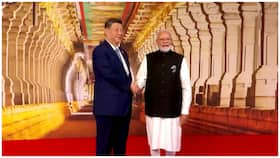
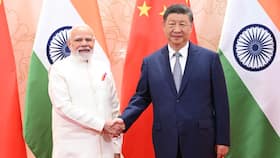
After being appointed as the President of the Country, Xi Jinping signaled a far-reaching reform agenda in both economic and social policy. One of his major campaigns include the anti corruption campaigns and during the inaugural speech as the general secretary, he announced that fighting corruption was one of the toughest challenges for his party. Xi made an official trip to India in September 2014 and visited New Delhi and Gujarat.
Xi Jinping was first married to Ke Lingling, daughter of an ambassador to Britain in early 1980s but within a few years they got divorced. Later in 1987, he married a renowned folk singer Peng Liyuan. Peng Liyuan also holds the rank of General in People's Liberation Army. The couple has one daughter Xi Mingze who has maintained a low profile and received her college education from Harvard University. Xi has been honoured with several foreign honours that include The Golden Olympic Order in November 2013, Venezuela’s Order of the Liberator in 2014, Cuba's Order of Jose Marti in 2014, Belgium's Grand Cordon of the Order of Leopold in 2014, Pakistan's Nishan-e-Pakistan in 2015 and Serbia's Order of the Republic of Serbia in 2016. Xi has been included in the Forbes List of the World’s Most Powerful person and has been ranked 3rd in the year 2013 and 2014 and in the year 2015, he was ranked 5th in the world's most powerful person.