 English


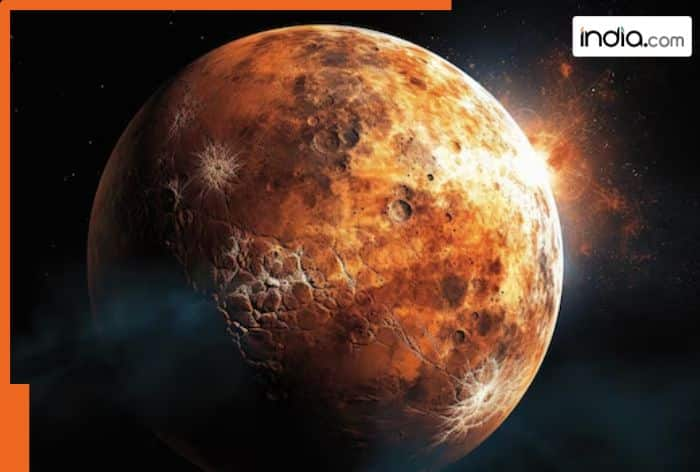
Mercury is the smallest planet in the solar system. According to NASA’s official website, Mercury is the fastest planet, zipping around the Sun every 88 Earth days. As the closest planet to the Sun, it has now revealed yet another mystery. Recent research has found that Mercury is slowly shrinking.
Which planet is shrinking and why is it so surprising?
According to research published in AGU Advances, Mercury has contracted by 2.7 to 5.6 kilometers in radius over its lifetime, which was compared to previous estimates of between 1 and 7 kilometers.
How much has Mercury’s radius decreased so far?
Mercury’s interior, especially its core, is composed primarily of iron. Billions of years ago, the core of this planet began to cool down gradually. The cooling and contraction of the core exerts pressure on Mercury’s outer layer, the crust, causing the surface to shift, creating large cracks in many places. In many places, cliffs—called ‘scarps’—form. The surface features of Mercury indicate that Mercury is changing from within.
Scientists studied the fault system of Mercury, assessing the amount of contraction the planet has gone through. Previous methods based on the length and height of surface features estimated contraction and yielded varying or inconsistent results.
How did scientists measure Mercury’s contraction more accurately this time?
In order to solve this problem, researchers Stephan R. Loveless and Christian Klimczak established a different method of study. Instead of measuring every fault via traditional means, they measured how much the largest fault in each dataset contributed to the contraction of Mercury, and then extrapolated those findings over the entire planet.
They applied this technique on three different datasets: one with approximately 6,000 faults, another with 653, and a smaller one with 100. Every three indicated the same answer: 2 to 3.5 kilometers of fault-caused shrinkage. When combining this withthe shrinkage caused by more cooling-driven processes, Mercury has shrunk a total of 5.6 kilometers.
Mercury is shrinking because the interior of the planet has been cooling since the planet formed some 4.5 billion years ago. In essence, as a planet cools off, it shrinks in volume like metal does when it cools when losing heat. Mercury has a very large iron core, which is highly unusual for a planet of its size, and makes up a large part of its volume. So, Mercury cools at a much quicker rate than large rocky planets like the Earth do. As Mercury’s core and mantle shrink, the planet’s crust must also respond to the reduction in volume underneath it.
In general, this process has lowered the radius of Mercury by around 2.7 to 5.6 kilometers, meaning the diameter of the planet has shrunk by about 11 kilometers since it was formed.









For breaking news and live news updates, like us on Facebook or follow us on Twitter and Instagram. Read more on Latest Viral News on India.com.

