


Analiza Pathak
Born in Guwahati, raised in Mussoorie and Delhi, She grew up reading magazines more than textbooks. She is an experienced writer/editor and has shifted focus to various aspects of communication. Her a ... Read More


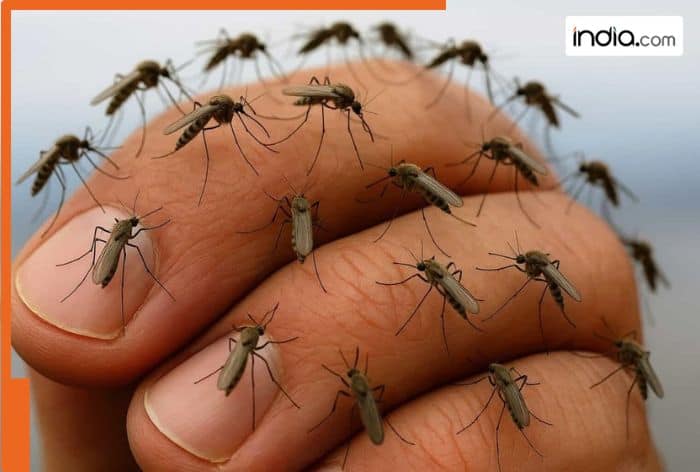
Science and nature have always been at odds with each other. But sometimes, in order to win this battle, scientists take steps that sound almost like a scene from a fantasy story. While the whole world is trying to kill mosquitoes or find ways to stay safe from them, one country is doing the complete opposite – it is raising millions of mosquitoes on purpose. So here it is — the place where 190 million mosquitoes are being bred every week is Brazil.
Brazil recently opened a massive mosquito-breeding facility in Campinas, a city in the state of São Paulo. The building covers about 1,300 square metres and runs under the World Mosquito Program (WMP). The factory can produce 190 million Aedes aegypti mosquitoes every week. This huge number is enough to cover a population of 100 million people for an entire year.
But this creates an obvious question: while the rest of us are worried about mosquitoes, why would a country build a factory to raise them?
The answer lies in the severe dengue outbreak Brazil faced in 2024 — the worst in its history. The country recorded more than 80 per cent of the world’s total dengue infections that year. Because of this crisis, scientists had to look for a new and powerful solution, which led to the creation of this large-scale mosquito project.
The reason Brazil is raising mosquitoes in this special factory is to completely stop the spread of dengue. In 2024, the country saw an extremely high number of dengue cases, and many people even lost their lives. To fight this growing danger, Brazil started using an unusual but effective method.
The secret behind this project lies in changing the biology of the mosquitoes. The factory uses something called the Wolbachia Method. During their growth, the mosquitoes are infected with a natural bacterium named Wolbachia. This bacterium is harmless to the mosquito, but it prevents the dengue virus from growing inside its body.
So when these Wolbachia-carrying mosquitoes bite humans, they cannot spread the dengue virus. Over time, these mosquitoes mix with the natural mosquito population, reducing the number of mosquitoes that can actually transmit dengue.
The final step of this method is to release the specially raised mosquitoes into the open environment. When mosquitoes carrying Wolbachia mate with normal wild mosquitoes, the protective bacteria get passed on to their offspring. Gradually, more and more mosquitoes in the wild begin carrying Wolbachia. Once this happens, they can no longer spread dengue, which helps permanently reduce infection rates.
Inside the factory, mosquito larvae are grown under controlled temperature conditions. After they mature, they are kept in cages. Male mosquitoes are fed a sugar solution, while female mosquitoes are given animal blood through bags designed to feel like human skin. The mosquitoes stay in these cages for about four weeks. After that, their eggs are collected and prepared for release into the environment.
The Wolbachia method has already been successful in countries like Indonesia and Colombia, where it helped bring down dengue cases by nearly 70%.

For breaking news and live news updates, like us on Facebook or follow us on Twitter and Instagram. Read more on Latest Viral News on India.com.